Touring Gear vs. Sourcing Locally: Is Buying a P2.9 Rental LED Display Better Than Renting?
- Home
- »
- LED Screen Buying Guides
- »
- Touring Gear vs. Sourcing Locally: Is Buying a P2.9 Rental LED Display Better Than Renting?
P2.9 rental LED display vs buying is one of the most common questions faced by event companies, AV integrators, production houses, churches, exhibition contractors, and LED rental businesses around the world.
The answer is not always straightforward. For some organizations, renting a display provides flexibility and avoids a large upfront investment. For others, purchasing a display system creates long-term savings, greater operational control, and new revenue opportunities. The challenge is understanding which option aligns best with your business model and future plans.
Over the last decade,the rental LED display market has expanded rapidly. Concerts have become larger, corporate events more immersive, and exhibition organizers increasingly rely on digital displays to attract attention and engage visitors. As a result, P2.9 has become one of the most popular pixel pitches in the rental market because it offers an excellent balance between image quality, viewing distance, portability, and cost.
Many buyers initially focus only on purchase price or rental rates. However, experienced project managers understand that the decision involves much more than comparing numbers on a quotation. Factors such as equipment availability, maintenance requirements, transportation logistics, storage costs, technician availability, and future business growth all influence the final outcome.
For example, a company organizing two events per year may benefit significantly from renting equipment. On the other hand, an event company running multiple projects every month may find that ownership becomes more economical after a relatively short period of time.
This guide explores every major factor involved in the P2.9 rental LED display vs buying decision. Whether you are an event organizer, rental company, church operator, stage production provider, or system integrator, this article will help you determine which approach provides the best return on investment and long-term business value.
Table of Contents
1. P2.9 Rental LED Display Cost vs Buying: Which Option Saves More Money Over Time?
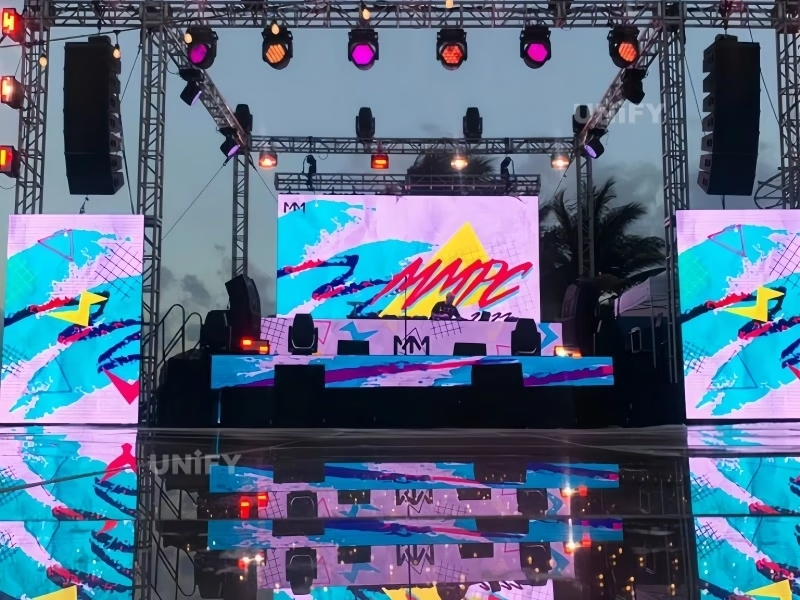
When discussing P2.9 rental LED display cost vs buying, many companies focus on the initial investment and overlook the long-term financial picture. While rental pricing may appear affordable on a project-by-project basis, recurring expenses can accumulate much faster than expected.
Understanding Rental Costs
Renting a display provides immediate access to equipment without requiring a large capital investment.
Typical rental costs often include:
- LED display rental fee
- Transportation
- Technical support
- Installation labor
- Dismantling services
- Insurance
- Emergency replacement equipment
For a single event, these expenses may seem reasonable. However, consider an event company organizing:
- 2 concerts per month
- 1 exhibition every month
- Several corporate events each quarter
Within a year, rental expenses can represent a substantial operational cost. Many business owners discover that after two or three years of regular projects, the cumulative amount spent on rentals exceeds the cost of purchasing their own inventory.
Ownership Costs
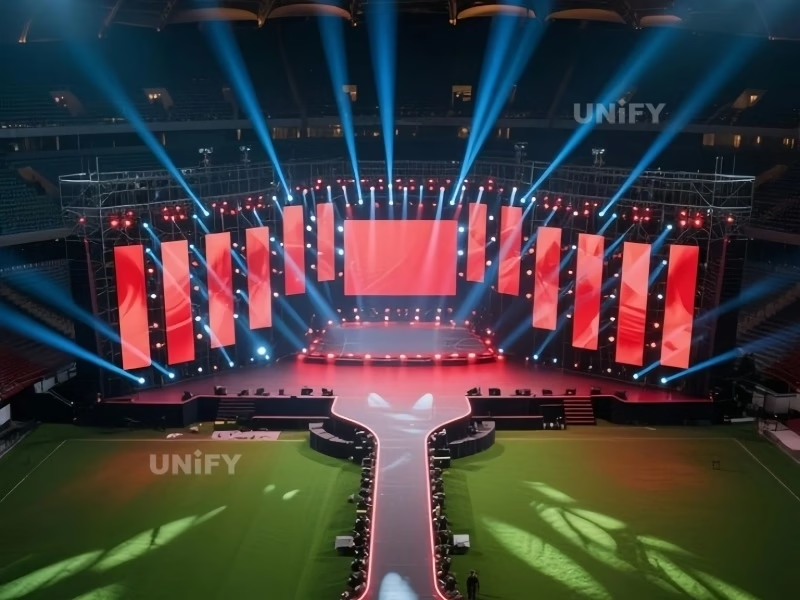
Purchasing a P2.9 rental display requires a larger upfront investment, but it also provides long-term benefits. Ownership expenses generally include:
- Initial equipment purchase
- Transportation equipment
- Flight cases
- Storage
- Maintenance
- Spare LED modules
- Receiving cards
- Power supplies
Unlike rental payments, however, these costs contribute to an asset that remains under your control. A well-maintained display can continue operating for many years and still retain resale value.
Hidden Costs Often Ignored
One of the most overlooked factors in the P2.9 rental LED display cost vs buying discussion is opportunity cost. Imagine receiving an urgent request from a customer during a busy season. If rental inventory is unavailable, you may lose the project entirely.
Owning equipment provides immediate availability and eliminates dependency on third-party rental suppliers. This advantage often generates additional revenue opportunities that are difficult to measure through simple cost comparisons.
Long-Term Financial Perspective
Many experienced rental companies use a simple rule: If equipment will be used frequently throughout the year, ownership usually becomes more economical.
The exact break-even point varies depending on local rental rates and project volume, but companies operating regular events often recover their investment much sooner than expected. For growing businesses, ownership can become a strategic asset that supports expansion while reducing operating expenses.
2. P2.9 LED Screen Rental vs Purchase for Events: Which Fits Your Business Model?
The decision between P2.9 LED screen rental vs purchase for events depends heavily on the nature of your business. Different organizations have different operational requirements, and what works for one company may not work for another.
Event Companies
Event companies often face unpredictable project schedules. A newly established event company may initially benefit from renting because project volume remains uncertain.
Renting allows the company to:
- Preserve cash flow
- Reduce financial risk
- Access different display specifications
- Avoid maintenance responsibilities
As project volume grows, however, ownership becomes increasingly attractive.
Churches and Houses of Worship
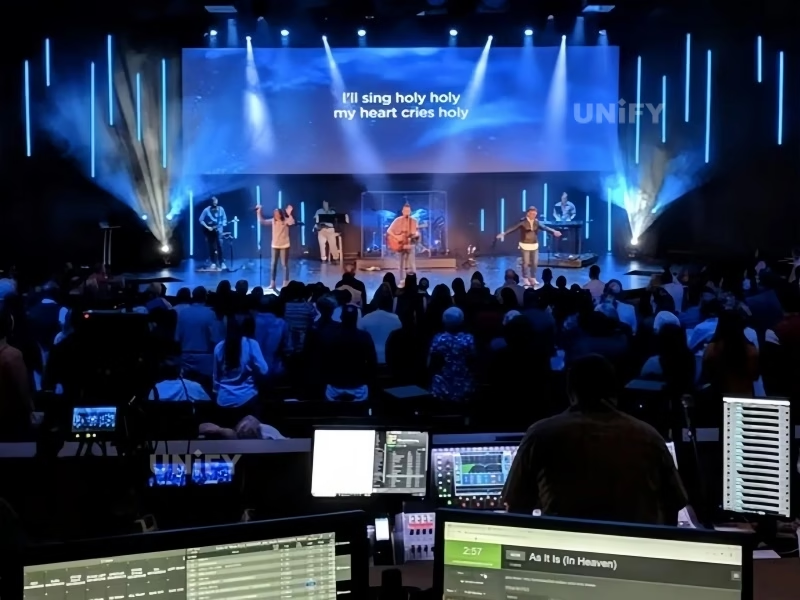
Frequently use church LED displays for:
- Weekly services
- Worship lyrics
- Sermon presentations
- Conferences
- Community events
Because these activities occur regularly, purchasing often provides better long-term value. Many churches find that owning a P2.9 rental LED video wall allows them to improve presentation quality while reducing annual event expenses.
Exhibition Contractors
Exhibition projects often require rapid installation and dismantling. A P2.9 display can be used repeatedly across multiple exhibitions, making ownership a strong option for contractors with a consistent project pipeline. The ability to reuse equipment across dozens of exhibitions significantly improves return on investment.
AV Integrators
System integrators frequently evaluate ownership differently. Some prefer ownership because it ensures complete project control. Others prefer rental partnerships because they can access multiple product types without carrying inventory. The best approach depends on project frequency and company strategy.
Rental Companies
For professional rental providers, purchasing equipment is typically essential. Ownership allows them to:
- Generate rental income
- Control inventory quality
- Standardize maintenance
- Expand service offerings
For rental businesses, the discussion is usually not whether to buy, but how much inventory to purchase and how quickly to expand.
3. P2.9 Rental LED Display Benefits for Concerts and Live Events
One reason P2.9 remains so popular is the wide range of advantages it offers for entertainment applications. The P2.9 rental LED display benefits for concerts extend beyond image quality and directly impact operational efficiency.
Excellent Visual Performance
Concert audiences expect immersive visual experiences. P2.9 delivers sharp and vibrant images while maintaining practical viewing distances. For many concert environments, the difference between P2.9 and finer pixel pitches is difficult for audiences to perceive, making P2.9 a highly cost-effective solution.
Suitable for Camera Applications
Modern concerts frequently involve:
- Live streaming
- Television broadcasts
- Social media content
- Professional photography
High refresh rate P2.9 displays perform well in these situations, helping to produce smooth and flicker-free visual content.
Fast Installation
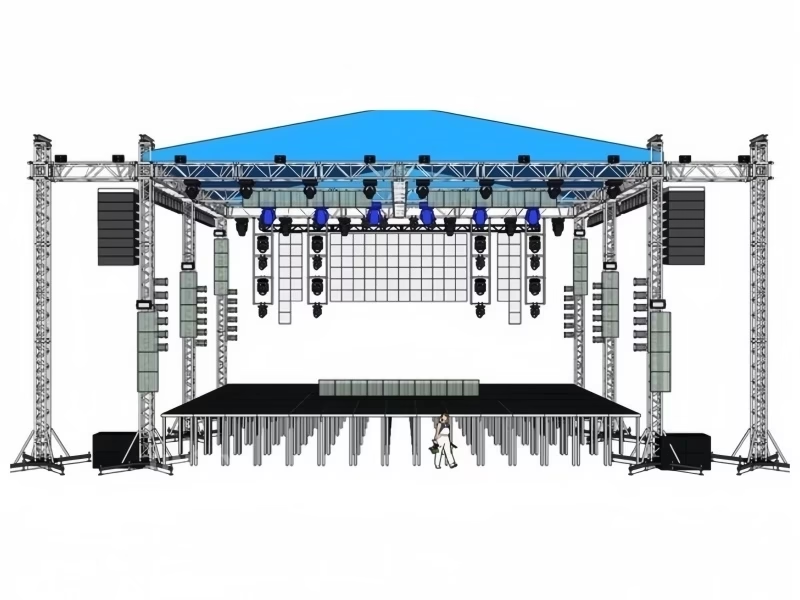
Time is critical in the live event industry. P2.9 rental systems are designed for quick deployment. Common features include:
- Quick-lock mechanisms
- Lightweight cabinets
- Tool-free servicing
- Efficient cable management
These characteristics reduce labor costs and shorten setup times.
Transportation Efficiency
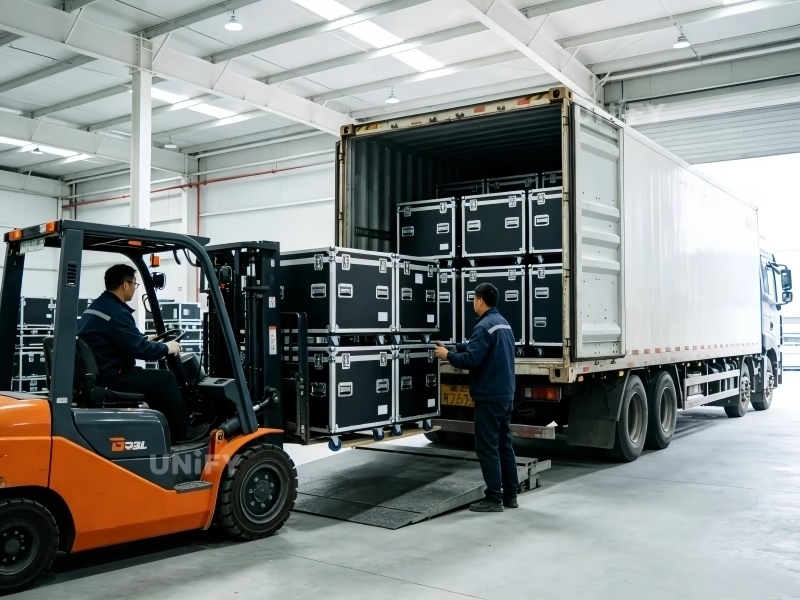
Concert equipment often travels between cities and venues. A P2.9 LED cabinet rental system typically uses lightweight aluminum cabinets and dedicated flight cases, making transportation safer and more efficient. For touring productions, transportation efficiency directly impacts profitability.
Flexible Stage Design
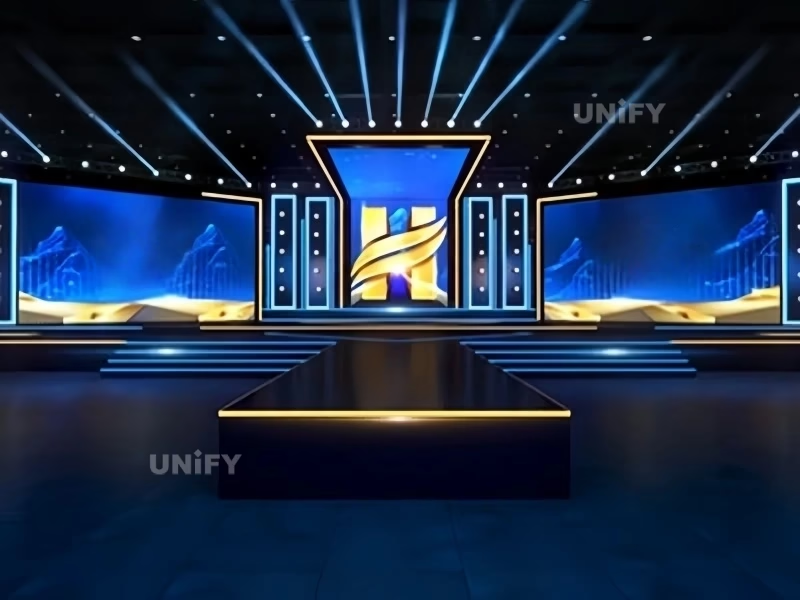
Modern stage productions demand creativity. A P2.9 rental LED video wall can be configured into various shapes and layouts, supporting:
- Main stage screens
- Side screens
- Backdrops
- Creative stage designs
- Branding elements
This flexibility makes P2.9 one of the most versatile solutions in the rental market.
Real-World Example
A regional concert organizer in Southeast Asia initially rented LED displays for every event. As event frequency increased, management realized that rental costs represented a growing portion of project expenses. After purchasing their own P2.9 inventory, they gained:
- Better scheduling flexibility
- Faster project execution
- Increased profit margins
- Additional rental revenue opportunities
Within several seasons, ownership became a major contributor to business growth. For organizations regularly managing concerts and live productions, the P2.9 rental LED display benefits for concerts often extend far beyond technical performance and become a significant competitive advantage.
4. P2.9 LED Panel Rental vs Ownership ROI: A Practical Investment Analysis
When evaluating P2.9 rental LED display vs buying, return on investment (ROI) is often the deciding factor. While technical specifications and upfront costs are important, the ultimate question for most businesses is simple: Which option generates the greatest financial return over time? The answer depends largely on utilization rates.
Understanding ROI in the LED Rental Industry
ROI is not calculated solely by comparing purchase price against rental fees. A proper analysis should include:
- Annual project volume
- Rental expenses
- Transportation costs
- Maintenance expenses
- Storage costs
- Labor requirements
- Potential rental income
- Equipment resale value
Many companies focus only on acquisition costs while ignoring the broader financial picture. For example, a business that organizes only three events annually may struggle to justify ownership. However, a company handling twenty or thirty projects each year often experiences a much faster payback period.
Revenue Opportunities Through Ownership
One major advantage of ownership is the ability to generate additional income. When a company owns a P2.9 rental LED video wall, the equipment can be used in multiple ways:
- Internal projects
- Third-party rental services
- Government events
- Corporate conferences
- Concerts
- Trade exhibitions
Unused inventory can become a revenue-producing asset rather than sitting idle. Many rental companies initially purchase equipment for internal projects but later discover significant demand from other event organizers.
Example ROI Scenario
Imagine an event company that organizes:
- Two conferences per month
One exhibition monthly - Several product launches each quarter
Under a rental model, every project incurs recurring costs. Under an ownership model, equipment expenses become fixed while project revenue continues to grow. As utilization increases, the cost per event decreases significantly. This is one reason many established event companies eventually transition from renting to ownership.
Operational Benefits That Influence ROI
ROI is not always measured solely in financial terms. Ownership also creates operational advantages, including:
- Immediate equipment availability
- Better scheduling flexibility
- Faster response to customer requests
- Reduced supplier dependency
- Improved project consistency
These advantages often translate into increased customer satisfaction and stronger client retention.
Resale Value and Asset Retention
Unlike rental expenses, purchased equipment retains value. Even after years of operation, quality LED displays can often be resold, upgraded, or repurposed. This residual value improves overall ROI and reduces the effective lifetime cost of ownership. For businesses planning long-term growth, ownership frequently delivers stronger returns than continuous renting.
5. P2.9 Rental LED Display vs Permanent Installation: Understanding the Differences
Another important consideration in the P2.9 rental LED display vs buying discussion is understanding how rental products differ from permanent installation displays. Although they may appear similar, they are designed for very different applications.
Purpose and Application
Rental LED displays are designed for mobility. They are frequently used in:
- Concerts
- Exhibitions
- Corporate events
- Church conferences
- Roadshows
- Product launches
Permanent installations are designed to remain in a fixed location for extended periods. Common applications include:
- Conference rooms
- Control centers
- Churches
- Auditoriums
- Retail stores
- Education facilities
Understanding the intended use is critical when selecting equipment.
Cabinet Design Differences
A P2.9 LED cabinet rental system is engineered for frequent assembly and dismantling.
Key features often include:
- Lightweight aluminum construction
- Quick-lock mechanisms
- Front and rear maintenance
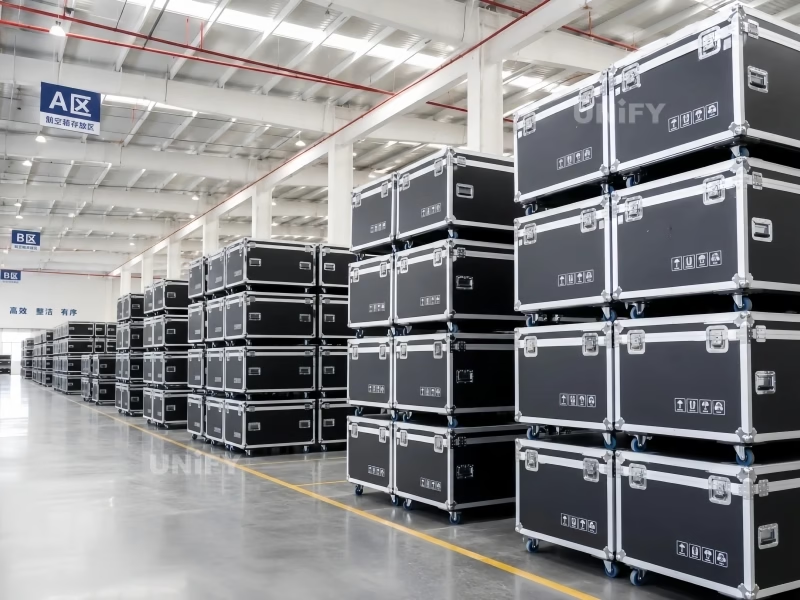
- Flight case compatibility
- High structural strength
Permanent installation products generally prioritize cost efficiency and fixed mounting structures rather than mobility.
Installation Speed
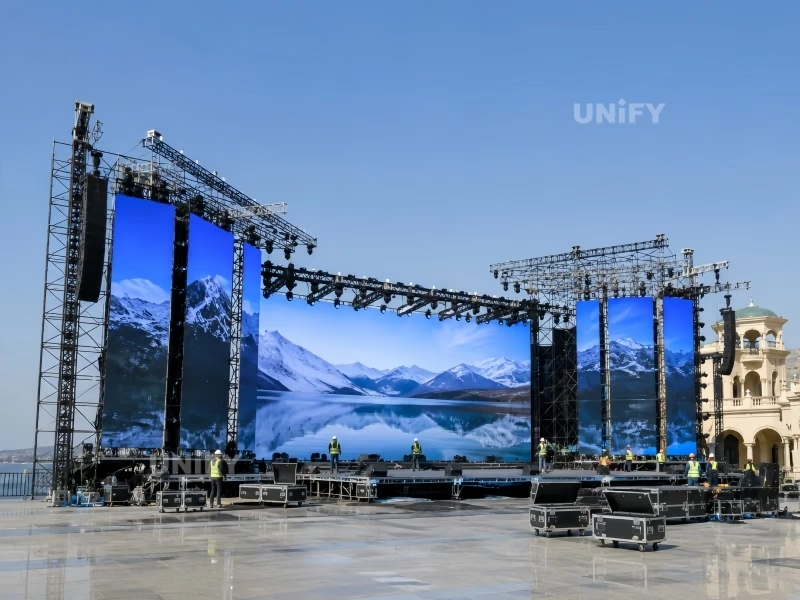
Rental systems are built for rapid deployment. A skilled installation team can assemble large LED walls quickly because rental cabinets are specifically designed to reduce setup time. Permanent installations are typically installed once and remain in place for years. Therefore, installation speed is usually less important.
Transportation Requirements
Transportation plays a major role in rental applications.
- Rental cabinets must withstand:
- Frequent loading
- Unloading
- Transportation vibration
- Repeated assembly cycles
Permanent displays rarely encounter these challenges.
Cost Considerations
In some cases, rental displays cost more than fixed-installation products because of their specialized design and durability requirements. However, this additional investment provides significant operational flexibility. For organizations requiring mobility, purchasing a rental display is usually the correct choice. For organizations requiring a fixed display in a single location, a permanent installation solution may offer better value.
Choosing the Right Solution
The decision should be based on actual project requirements rather than price alone. Companies that frequently move displays between venues benefit greatly from rental products. Organizations with fixed locations typically achieve better value through permanent installation displays. Understanding this distinction helps buyers avoid costly purchasing mistakes.
6. How to Choose the Right P2.9 Rental LED Video Wall Supplier
Choosing the right Rental LED screen supplier is just as important as selecting the right product. Even the best display specification can underperform if the supplier lacks experience, technical support, or quality control.
Evaluate Project Experience
A supplier with extensive rental market experience is more likely to understand real-world challenges. Ask potential suppliers about:
- Concert projects
- Exhibition installations
- Church applications
- Touring productions
- Corporate events
Relevant experience often translates into better recommendations and stronger support.
Assess Product Quality
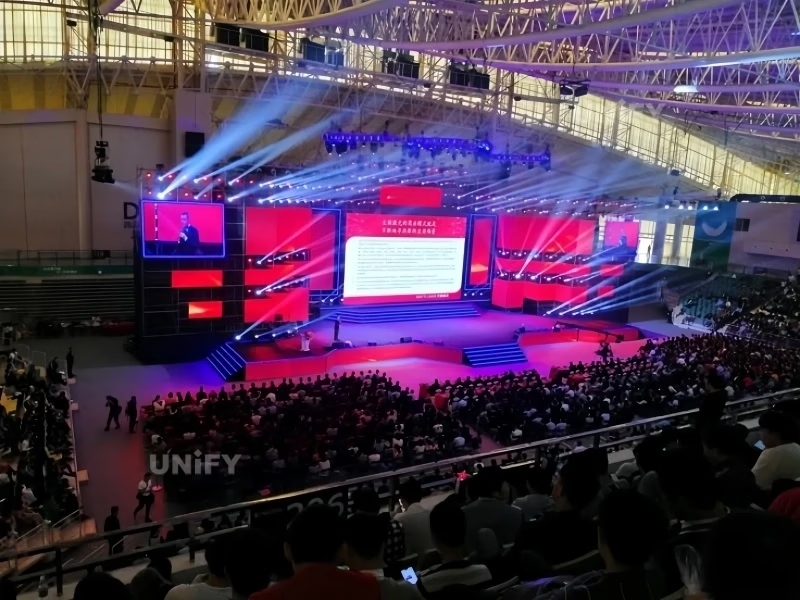
Not all P2.9 displays offer the same performance. Key factors to evaluate include:
- Cabinet quality
- Module consistency
- Refresh rate
- Color uniformity
- Serviceability
Request project photos and videos whenever possible.
Verify After-Sales Support
Technical support becomes extremely important after installation. Ask suppliers about:
- Spare parts availability
- Technical training
- Remote troubleshooting
- Warranty coverage
Strong support can significantly reduce operational risks.
Consider Long-Term Partnership Potential
The lowest price does not always represent the best value. Many successful rental companies prioritize suppliers capable of supporting future growth.
A reliable supplier should provide:
- Product consistency
- Expansion compatibility
- Technical guidance
- Stable lead times
Building a long-term partnership often produces better results than selecting suppliers solely based on price.
7. Common Mistakes Buyers Make When Comparing P2.9 LED Cabinet Rental and Ownership
Many buyers make avoidable mistakes when evaluating P2.9 LED cabinet rental and ownership options. Understanding these mistakes can help improve purchasing decisions.
Focusing Only on Initial Cost
The most common mistake is comparing only purchase price against rental fees. A complete evaluation should include:
- Maintenance
- Transportation
- Labor
- Storage
- Equipment availability
- Revenue opportunities
Long-term costs matter more than short-term savings.
Ignoring Utilization Rates
Equipment utilization has a major impact on ROI. Companies with frequent projects often benefit from ownership far sooner than expected. Failing to analyze actual usage patterns can lead to poor investment decisions.
Underestimating Storage Requirements
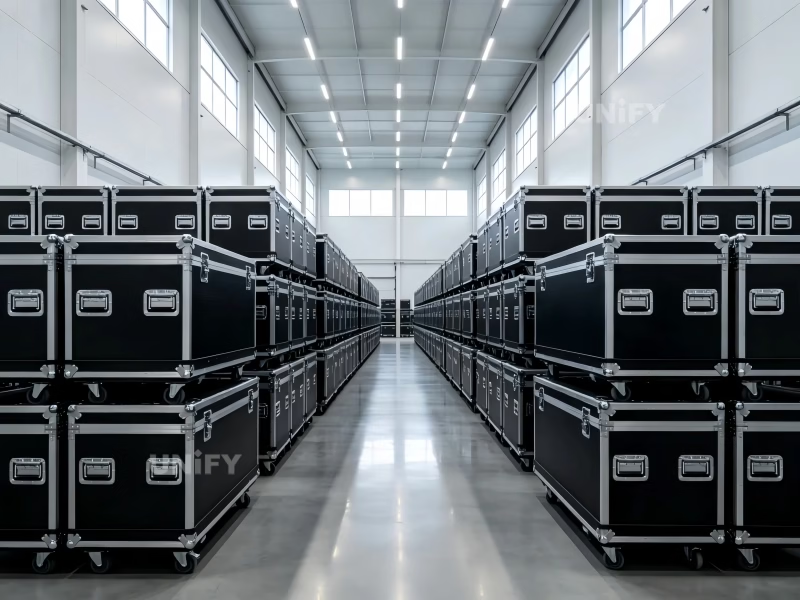
Ownership requires proper storage facilities. Without suitable storage conditions, equipment lifespan may be reduced. Buyers should plan storage requirements before purchasing.
Choosing Based Solely on Price
Low-cost products can become expensive if they create operational problems. Issues such as:
- Frequent repairs
- Color inconsistency
- Difficult maintenance
- Poor support
can increase total ownership costs significantly.
Failing to Consider Business Growth
Some companies evaluate only current needs. A better approach is to consider future growth. If project volume is expected to increase, ownership may become advantageous much sooner than anticipated.
Overlooking Supplier Support
After-sales support is often underestimated during purchasing decisions. Reliable technical assistance can reduce downtime and protect investment value. Choosing a supplier based solely on price may create unnecessary risks later.
8. Conclusion
When evaluating P2.9 rental LED display vs buying, there is no universal answer that fits every organization. The right decision depends on your event frequency, business model, operational capabilities, and long-term growth plans.
For companies that organize only occasional events, renting remains an attractive option because it requires minimal upfront investment and provides access to different display technologies without ownership responsibilities. Renting also offers flexibility for organizations that handle diverse project types or operate in rapidly changing markets.
However, businesses with regular event schedules often discover that ownership delivers stronger long-term value. Purchasing a P2.9 rental LED display can reduce recurring rental expenses, improve scheduling flexibility, increase equipment availability, and create additional revenue opportunities through sub-rental services.
It is also important to evaluate factors beyond simple cost comparisons. Transportation, maintenance, storage, technical support, supplier reliability, and future expansion plans all influence the true financial outcome.
Ultimately, the debate around P2.9 rental LED display vs buying should focus on overall business objectives rather than short-term pricing alone. By carefully assessing utilization rates, operational requirements, and future growth opportunities, companies can make a decision that supports profitability and sustainable business development for years to come. Welcome to contact Unify to get more details for your project.
9. FAQs
For occasional projects, renting is usually more cost-effective. However, companies with frequent events often find that ownership becomes more economical over time because recurring rental expenses accumulate quickly.
A high-quality P2.9 display can operate for many years when properly maintained. Actual lifespan depends on usage frequency, transportation conditions, environmental factors, and maintenance practices.
P2.9 provides an excellent balance between image quality, viewing distance, affordability, and operational flexibility. It is suitable for concerts, exhibitions, conferences, churches, and many other applications.
Certain rental models are specifically designed for outdoor applications. Buyers should confirm the protection level and environmental specifications before deployment.
ROI varies based on project volume. Companies running frequent events generally achieve a faster return because equipment utilization is higher.
Rental displays are designed for mobility, rapid assembly, and repeated transportation. Permanent installation displays are optimized for fixed locations and long-term operation.
Routine maintenance is relatively straightforward when proper training and spare parts are available. Many suppliers also provide technical support and maintenance guidance.
Evaluate supplier experience, product quality, after-sales support, customer references, and long-term partnership potential. A reliable supplier like Unify often provides greater value than the lowest-priced option.
Related Posts