
5-Minute Guide: SMD vs COB vs GOB LED Displays
- Home
- »
- LED Display Technology
- »
- 5-Minute Guide: SMD vs COB vs GOB LED Displays
Over the past decade of engineering and deploying commercial LED video walls, I have seen countless projects bleed thousands of dollars in hidden maintenance costs simply because the buyer chose the wrong packaging technology. When you are staring at a pile of quotes from different manufacturers, the sheer volume of technical acronyms can easily lead to a costly misstep—either overpaying for microscopic specs you don’t need, or under-budgeting for a screen that requires constant pixel repairs.
Today, the industry’s most critical battleground—and the most frequent point of confusion for my clients—is the SMD vs COB vs GOB LED display debate.
While traditional marketing brochures love to get bogged down in complex physical structures and diode jargon, the reality of choosing between COB LED vs SMD LED (and the increasingly popular GOB armor) comes down to three practical factors: your specific viewing environment, your upfront budget, and your long-term tolerance for dead pixels.
As someone who designs these visual systems for a living, I am going to cut through the manufacturer fluff. In this straightforward, 5-minute guide, I will break down exactly how these three technologies perform in the real world. By the time you finish reading, you will have the exact insider knowledge needed to confidently select the right display technology, ensuring maximum ROI for your specific project without leaving money on the table.
Table of Contents
1. What Exactly Are SMD, COB, and GOB?
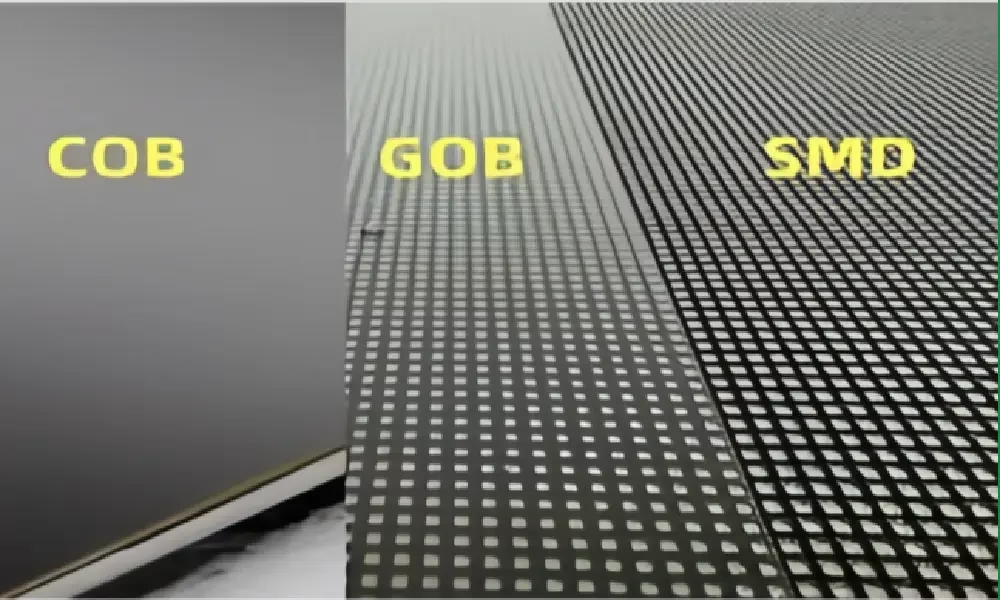
To navigate the SMD vs COB vs GOB selection process, it is essential to understand the structural differences in how these LEDs are integrated into the display module. Each method represents a distinct approach to balancing cost, visual performance, and physical protection.
SMD (Surface-Mounted Device)
SMD technology utilizes surface-mount technology to solder individual LED packages onto the surface of a printed circuit board (PCB). This process is conceptually similar to laying tiles on a floor, where each diode is a self-contained unit fixed to the substrate. As the most mature and cost-effective solution in the industry, SMD offers excellent color consistency and ease of repair. However, because the diodes are physically exposed, the “tiles” can be vulnerable to impact, which often leads to “dead pixels” during installation or high-traffic usage.
COB (Chip on Board)
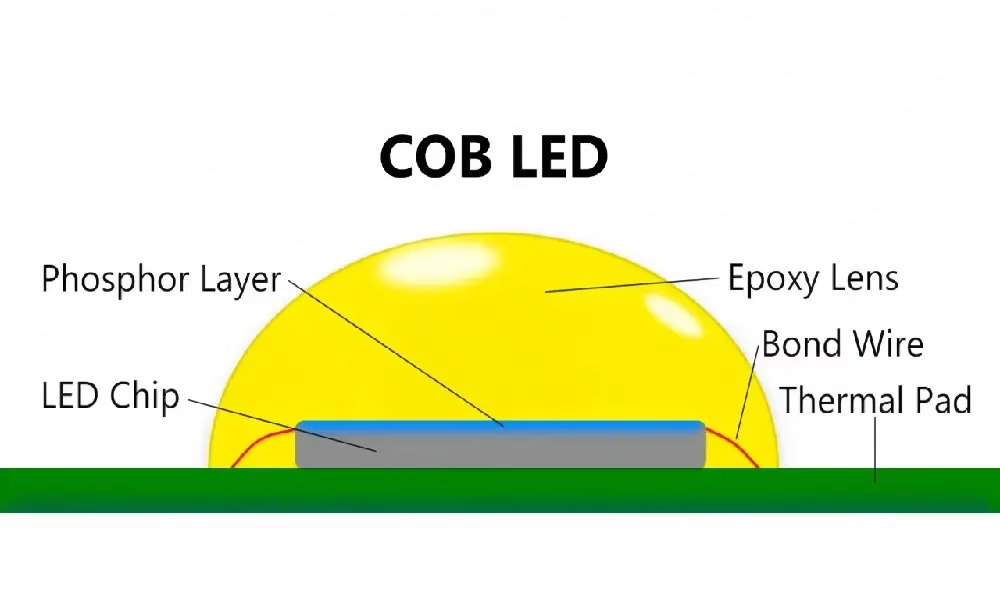
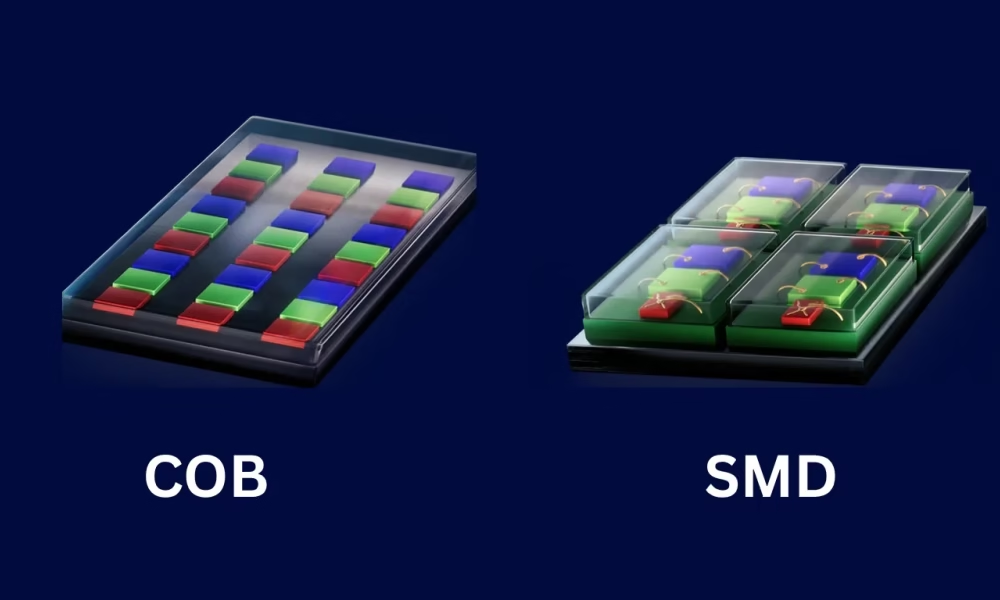
Chip on board technology eliminates the traditional diode package entirely by bonding bare light-emitting chips directly to the PCB substrate. If SMD is akin to laying tiles, COB is comparable to planting seeds directly into the soil and sealing them under a uniform protective layer. This architecture removes the need for individual housings and wire bonding, resulting in a completely seamless, pitch-black surface. COB is the benchmark for high-end, fine-pitch displays, offering superior heat dissipation, wider viewing angles, and absolute immunity to environmental factors like dust and moisture.
GOB (Glue on Board)
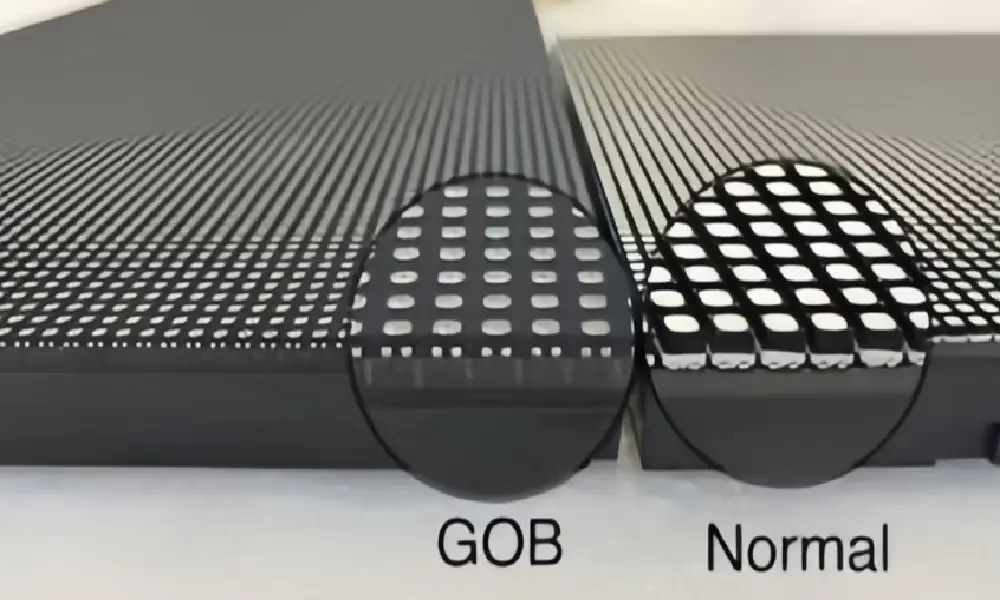
GOB is an advanced protective layer applied to standard SMD modules to enhance their structural integrity. By pouring a transparent optical resin over the module surface, GOB essentially provides a “bulletproof vest” for the exposed SMD diodes. This resin fills the microscopic gaps between the components, creating a robust shield against physical impact, vibration, and oxidation. It serves as a strategic middle ground for projects that require the reliability of a sealed surface without the premium investment typically associated with COB manufacturing.
2. Comparing the Performance of SMD vs COB vs GOB
Navigating the SMD vs COB vs GOB selection process requires a deep understanding of how these technologies perform under real-world operational stress. Beyond the technical specifications, the choice often hinges on three decisive factors: visual comfort, physical durability, and long-term serviceability.
Visual Performance and the COB vs SMD Brightness Reality
In the high-stakes world of indoor LED displays, the COB vs SMD brightness debate is centered on optical comfort rather than raw intensity. SMD technology relies on a “point light source,” which can achieve high peak brightness suitable for large, well-lit spaces but may cause visual fatigue during close-up viewing due to its inherent graininess.
Conversely, COB serves as a “surface light source” where the resin encapsulation diffuses light more uniformly. This effectively eliminates the glare often associated with high-output LEDs, making it the superior choice for high-definition command centers or corporate boardrooms where viewers are positioned within two meters of the screen.
Durability and Impact Protection in High-Traffic Zones
For environments such as retail malls, schools, or public exhibition halls, the physical robustness of the display is non-negotiable. Standard SMD modules are susceptible to “pixel loss” from accidental contact or vibration because the diodes are physically exposed.
GOB and COB technologies provide a definitive solution to this vulnerability. By sealing the LEDs under a protective resin layer, both formats offer exceptional resistance to impact, dust, and moisture. If your project is located in a high-traffic area where the screen is within reach of the public, the “armor” provided by GOB or COB is an essential investment to prevent frequent hardware damage.
The Serviceability Trade-off: On-Site Repair vs. Factory Recoating
A critical, often overlooked aspect of the SMD vs COB vs GOB comparison is the ease of maintenance. SMD remains the industry leader in terms of serviceability; a qualified technician can replace an individual failed diode on-site in minutes using standard tools. This modular repairability ensures minimal downtime for mission-critical applications.
In contrast, the protective layers that make COB and GOB so durable also make them nearly impossible to repair in the field. A single pixel failure typically requires the entire module to be removed and shipped back to the manufacturer for specialized repair and resin recoating. While these technologies fail less often, the logistical cost and downtime associated with their repair are significantly higher than traditional SMD.
3. Selecting the Best Fit: The SMD vs COB vs GOB Application Guide
Identifying the ideal technology is an exercise in aligning your operational environment with the correct engineering architecture. Based on years of deployment data from our LED screen factory, I have categorized the three most common project profiles to help you resolve the SMD vs COB vs GOB dilemma for your specific space.
Scenario A: High-End Boardrooms and Why COB LED vs SMD is the Elite Choice
In mission-critical environments such as command centers, Fortune 500 corporate boardrooms, or high-definition broadcast studios, the viewing distance is typically 1 to 2 meters. At this range, visual artifacts and eye fatigue are the primary concerns. When it comes to ultra-fine pixel pitch for high-end environments, LED COB vs SMD is not even a contest—COB wins.
The seamless, non-glare surface of a COB LED Display is specifically engineered for these sub-P1.2mm applications. It offers a level of image depth and optical comfort that traditional point-source LEDs cannot replicate, making it the gold standard for stakeholders who demand a “print-like” digital canvas.
Scenario B: High-Traffic Zones and the SMD vs COB vs GOB Durability Factor
If your display is destined for a retail mall, a public exhibition hall, or a high-energy nightclub, physical vulnerability is your biggest risk. These are areas where the screen is within reach of the public or subject to frequent movement and vibration.
In these cases, the SMD vs COB vs GOB debate is often settled by GOB (Glue on Board). By applying a protective resin “armor” over the LED modules, GOB provides the impact resistance of a high-end system at a significantly lower cost than COB. For pixel pitches between P1.5 and P2.5, GOB offers the durability required to withstand accidental collisions and moisture without compromising visual integrity.
Scenario C: Large Auditoriums and the Practical SMD vs COB ROI Strategy
For larger venues like houses of worship, lecture halls, or standard advertising displays, the viewing distance is often 3 meters or more. In these settings, the microscopic benefits of COB are less perceptible, and the priority shifts toward overall screen size, peak brightness, and ease of maintenance.
For standard viewing distances on a budget, the SMD vs COB debate leans heavily toward SMD. Because SMD technology is highly mature and exceptionally easy to repair on-site, it remains the most practical solution for P1.8 to P3.0 installations. Working directly with an experienced factory allows you to leverage the high-yield production of SMD to maximize your display area while ensuring a “fix-it-in-minutes” maintenance strategy.
4. The SMD vs COB vs GOB Selection Cheat Sheet
Choosing the right technology involves balancing performance with operational costs. Here is a quick summary of COB vs SMD LED and GOB technologies to help you make an informed decision at a glance.
| Feature | SMD LED Display | COB LED Display | GOB LED Display |
| Anti-collision | Low (Fragile diodes) | High (Hard resin surface) | High (Protective glue layer) |
| Water/Dust Proof | IP20 (Standard Indoor) | IP65 (Front surface) | IP65 (Front surface) |
| Black Ink Consistency | Moderate | Excellent (Deep Black) | Good |
| Repair Difficulty | Low (On-site repairable) | High (Factory repair only) | High (Factory repair only) |
| Relative Price | $ (Cost-Effective) | $ (Premium) | $(Mid-Range) |
5. Conclusion: Selecting the Ideal SMD vs COB vs GOB Solution
In the rapidly evolving world of display technology, there is no single “best” technology—there is only the best fit for your specific environment, viewing requirements, and budget. While COB LED vs SMD LED represents a significant leap in visual comfort and durability, traditional SMD remains the powerhouse of versatility and ease of maintenance for large-scale installations.
As a professional LED screen factory, our goal is to ensure your investment delivers the highest possible ROI. Whether you are building a state-of-the-art command center or a high-impact retail display, understanding the trade-offs between SMD vs COB vs GOB is the first step toward a successful deployment.
Don’t leave your project’s success to chance. Contact us today for a free ROI analysis and a customized quote tailored to your specific site conditions. Our engineering team is ready to help you navigate the technical nuances of SMD vs COB vs GOB to find the perfect display solution for your needs.
6. FAQs
Related Posts

LED Packaging Technology Guide: SMD vs COB vs GOB vs MIP
Unlock the secrets of LED packaging technology and see which type delivers insane brightness and perfect color.