Contact us
- Home
- »
- LED Screen Buying Guides
- »
- How to Choose the Best Stage LED Backdrop Screen for Events?
LCD vs LED : Which is Best for Your Business?
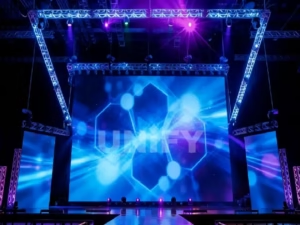
In the world of live events, visual immersion is no longer a luxury—it is a necessity. Whether you are organizing a high-energy music festival or a formal corporate summit, the visual centerpiece defines the audience’s experience. For decades, traditional projection was the standard, but it often failed to deliver under bright stage lights. Today, the industry has shifted decisively toward the professional Stage LED Backdrop Screen.
However, moving to LED technology brings a new set of questions: How do you choose the right pixel pitch? Should you rent or buy to maximize ROI? What mechanical features ensure safety and speed? This comprehensive guide dives deep into the technical specifications, cost factors, and practical applications of stage led backdrop screens. We will equip you with the knowledge to select a display that not only fits your budget but also transforms your stage into an unforgettable visual spectacle.
Table of Contents
1. Why is a Stage LED Backdrop Screen better than traditional projection?
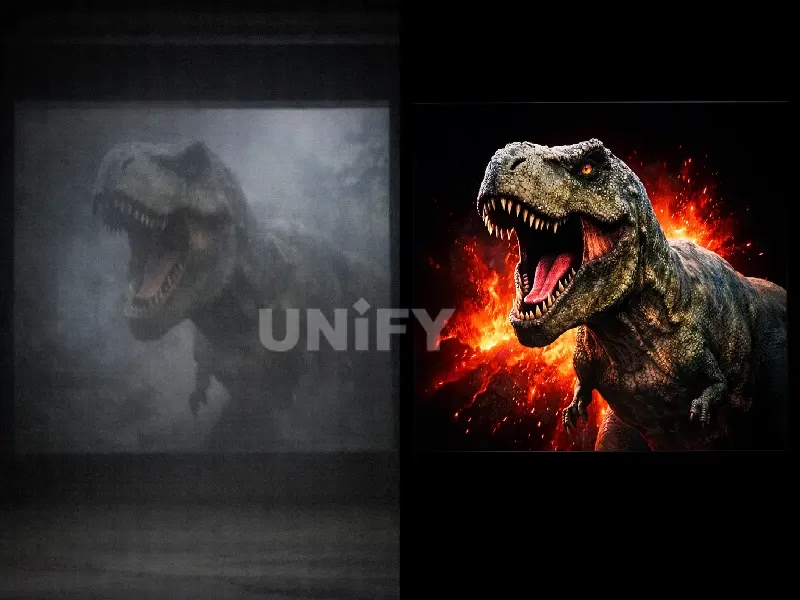
For modern events, the stage LED backdrop screen has rapidly replaced traditional projection. The reason is simple: reliability and visual impact. Unlike projectors that require dark environments, a professional led stage screen delivers superior performance in three key areas:
Brightness (No More Dark Rooms):
Projectors easily wash out under stage lights. In contrast, a led screen backdrop offers brightness levels of 800-1200 nits, ensuring vivid images even under spotlights. Whether for an indoor conference or as a bright concert LED screen, the visuals remain sharp and clearly visible to the entire audience.True Contrast & Color Depth:
Projectors cannot produce “true black”—only grey. A led wall backdrop, however, achieves infinite contrast by turning off individual pixels. This results in richer colors and deeper blacks for your video screen backdrops, creating a more immersive visual experience than any passive background stage screen.Flexibility & Modular Freedom:
Projection requires a clear “throw distance” and often casts shadows on the presenters. A stage led display eliminates these constraints. Its modular design allows you to build a creative stage video wall in any shape—curved, scattered, or massive—without worrying about space limitations or shadows on your backdrop led screen. This backdrop is a crucial part of our overall Stage LED Display Solutions.
2. Different types of Stage LED Backdrop Screens for creative designs
Modern stage design is no longer limited to a flat rectangle. To bring unique visual concepts to life, a professional Stage LED Backdrop Screen comes in various forms. Depending on your artistic vision and venue requirements, you can choose from these specialized categories:
Standard Flat Screens
This is the most common configuration for a main stage video wall. Built using standard rental cabinets (typically 500x500mm or 500x1000mm), these screens provide a seamless, high-definition canvas. They are the versatile foundation for keynote presentations, backgrounds, and primary video playback.
Curved Screens
To break the monotony of straight lines, many high-end concert screen setups utilize panels equipped with high-precision curve locks. These locks allow you to adjust the angle (usually ±10° or ±15°) to create concave or convex shapes. This “wrapping” effect draws the audience deeper into the performance and offers a wider viewing angle.
Transparent LED Screens
Often called “ice screens,” these are lightweight and offer high transparency (up to 70%). They are ideal when you want lighting effects or smoke to pass through from behind the LED background screen. This creates a stunning 3D depth and holographic effect that solid panels cannot achieve.
Interactive Floor Screens
To create a fully immersive environment, the visual display can extend from the wall to the ground. LED floor tiles are engineered with high load-bearing capacity and durable masks, allowing performers to dance or walk directly on the dynamic video content.
3. How to choose the right Pixel Pitch and Refresh Rate for your Stage LED Backdrop Screen?
Selecting the hardware is just as important as the content itself. A professional Stage LED Backdrop Screen is defined by critical technical parameters that determine whether the display looks sharp to the naked eye and flawless on camera.
Pixel Pitch: The Viewing Distance Formula
Pixel pitch (e.g., P2.6, P3.9) refers to the distance between LED clusters. The smaller the number, the higher the resolution. To choose the right pitch for your stage led display, use this simple rule of thumb: Optimal Viewing Distance (m) ≈ Pixel Pitch (mm) × 3.
P2.6 / P2.9: Ideal for indoor conferences where the first row is close (3-8 meters).
P3.9 / P4.8: The standard for large venues. It offers the best balance of cost and resolution for crowds viewing from 10 meters away.
Refresh Rate: Essential for Cameras (Anti-Moiré)
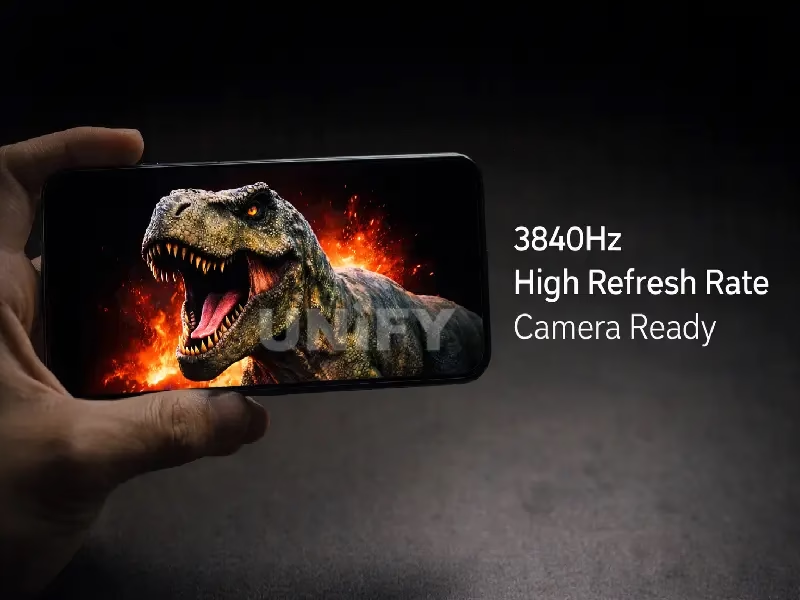
While the human eye is easily satisfied with lower refresh rates, cameras are not. If your event involves live streaming or IMAG (Image Magnification), a low refresh rate will result in flickering or “scanning lines” on the video. We strongly recommend a High Refresh Rate IC (3840Hz or higher). This ensures your backdrop led screen appears stable and smooth on HD/4K cameras.
Grayscale: 14-16 Bit for True Color
High brightness isn’t enough; you need depth. A screen with 14-16 bit grayscale processing can display trillions of colors. This is crucial for maintaining detail in the shadows and ensuring smooth gradients without “color banding,” especially when displaying high-quality brand visuals.
4. Purchase vs. Rental: Which Stage LED Backdrop Screen strategy maximizes your ROI?
Deciding whether to buy or rent is one of the biggest financial decisions for event organizers and venue owners. While a professional Stage LED Backdrop Screen is a powerful visual asset, the right choice depends entirely on your usage frequency, budget flexibility, and technical capabilities.
To help you maximize your Return on Investment (ROI), let’s break down the pros and cons of each strategy.
Rental (The Flexibility Play)
Renting LED screen is the ideal solution for one-off events, such as annual corporate galas, weddings, or short-term music tours. The primary advantage is convenience and low upfront cost. You pay a fraction of the hardware price, and the rental provider handles the logistics, transportation, and technical setup.
This option is best if you do not want to worry about warehousing, maintenance, or technology becoming obsolete. For occasional users, renting allows you to choose a different led stage screen size or pixel pitch for every specific event without being tied to a single fixed inventory.
Purchase (The Long-Term Investment)
Buying is the smarter financial move for entities with consistent needs, such as Houses of Worship (Churches), theaters, nightclubs, or AV production companies.
Owning your stage backdrop screen gives you total control. You can use the display whenever you want without scheduling conflicts or recurring rental fees. Over time, the “cost per use” drops significantly. Additionally, for AV companies, purchasing is an income-generating move—you become the supplier rather than the customer.
The "10-Event Rule" for Decision Making
Still unsure which path to take? Use this simple calculation matrix to guide your choice:
Rent if: You will use the screen fewer than 6 times per year. The Total Cost of Ownership (storage + maintenance + depreciation) likely outweighs the rental fees.
Buy if: You plan to use the screen more than 10 times per year. In this scenario, the cumulative rental costs would typically exceed the purchase price of a new screen within 12 to 18 months, making buying the clear winner for ROI.
5. How to install and dismantle a rental Stage LED Backdrop Screen quickly and safely?
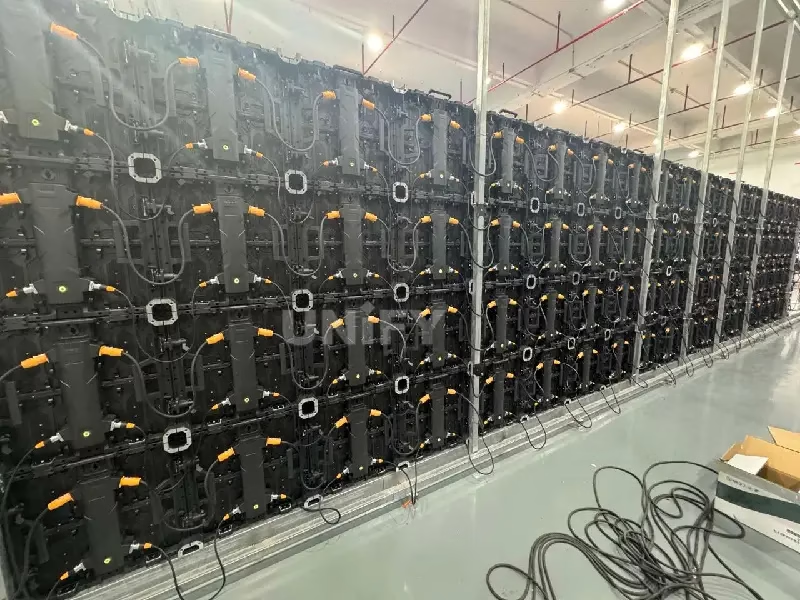
n the fast-paced events industry, time is money. A rental Stage LED Backdrop Screen must be designed not just for visual performance, but for rapid deployment and tear-down. Whether you are setting up for a touring concert or a temporary corporate event, efficiency is key.
Here are the critical mechanical features and methods that ensure a smooth installation process:
Hanging vs. Stacking: Choosing Your Method
There are two primary ways to install stage screens depending on the venue’s infrastructure:
Hanging (Truss System): This involves using hanging bars to suspend the cabinets from a truss rig. It is ideal for large concerts where the screen needs to be high above the stage for maximum visibility.
Stacking (Ground Support): If the venue ceiling cannot support heavy loads, the screen is stacked on the floor using a specialized back-frame system. This creates a solid “ground wall” and is often safer for indoor ballrooms.
The Fast Lock Mechanism: Speed is Everything
Gone are the days of screwing panels together with tools. Modern rental cabinets feature high-precision Fast Locks (or Quick Locks). These tool-less mechanisms allow a single technician to align and lock two cabinets together in under 10 seconds. This significantly reduces labor costs and ensures that even a massive video wall can be assembled in a few hours.
Corner Protection: Saving Your LEDs
The most vulnerable moment for a led backdrop is during transportation and assembly. One accidental bump can damage the edge pixels, creating dead spots.
To prevent this, look for cabinets equipped with Flip-shield Corner Protectors. These are small mechanical guards that flip out to cover the corners during handling and flip back in when the screen is assembled, ensuring a seamless gap-free connection while keeping your investment safe.
6. What factors influence the price of a Stage LED Backdrop Screen?
When budgeting for your event technology, you will notice a wide price range in the market. Why does one Stage LED Backdrop Screen cost significantly more than another, even if they look similar from the outside? The price is driven by four main factors involving hardware specs and raw materials.
Here is what you are actually paying for:
Pixel Pitch (Resolution Density)
This is the biggest cost driver. The rule is simple: the smaller the pixel pitch, the higher the price. A P2.6 stage led display contains approximately 147,456 LEDs per square meter, whereas a P3.9 screen has only 65,536. More pixels mean more materials and higher manufacturing complexity, leading to a higher cost per panel.Component Quality (Gold vs. Copper)
The quality of the internal components dictates the screen’s lifespan and stability.LED Lamp: Top-tier lamps (like Nationstar) use Gold wire bonding, which offers superior conductivity and anti-oxidation. Cheaper alternatives use Copper or Iron wire, which costs less but fails faster.
Driver IC: High refresh rate ICs (3840Hz+) cost more than standard ICs but are essential for professional use.
Cabinet Material (Die-cast Aluminum)
For rental applications, weight matters. Professional rental cabinets are made of Die-cast Aluminum, which is lightweight, durable, and precise for seamless connection. Cheaper, heavy iron cabinets are available but are generally unsuitable for frequent touring or fast installation.Hidden System Costs
Don’t forget that the price of the panels is not the total cost. A fully functional stage video wall requires essential accessories that are often quoted separately:Flight Cases: Essential for safe transport.
Video Processors: To scale and manage input signals.
Power/Data Cabling & Spare Parts: Always budget for extra modules and cables.
7. Top Applications: Where can you use these LED displays?
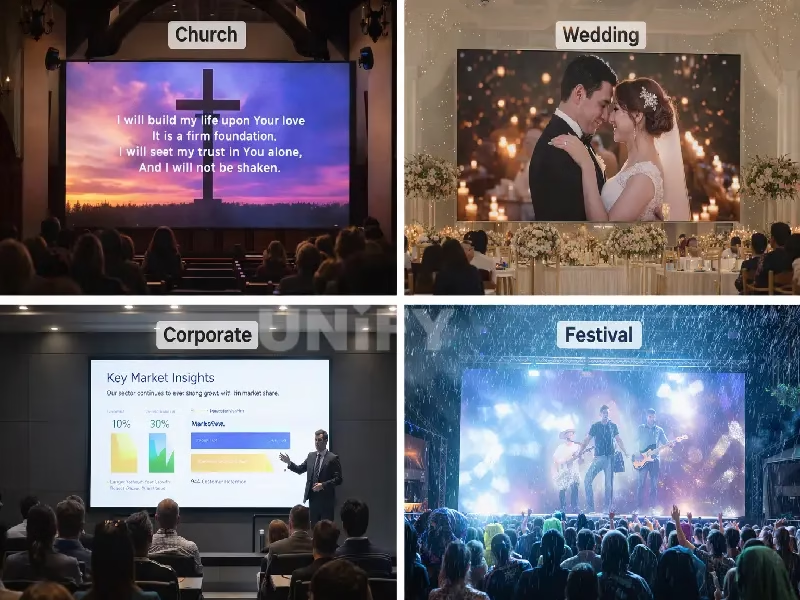
One of the greatest advantages of a modular Stage LED Backdrop Screen is its versatility. The same panels used for a rock concert on Saturday can often be reconfigured for a business conference on Monday.
Here are the four most popular sectors where these displays are delivering maximum value:
LED Screen for Music Festivals & Concerts
This is the most demanding environment for display technology. An outdoor led screen for concert touring must be rugged, waterproof, and incredibly bright to compete with intense stage lighting.
Organizers use these massive screens not just for visual effects, but for IMAG (Image Magnification)—showing close-ups of the band so fans in the back row don’t miss a beat. A high-refresh-rate concert screen ensures that the fast-paced visuals sync perfectly with the music without any lag.
LED Screen for Corporate Conferences & Product Launches
In the business world, clarity is king. Whether it is a keynote speech or a new product reveal, the text on the slides must be readable from every angle.
For these events, a fine-pitch (P2.6 or P2.9) stage screen background is essential. Unlike projection, which requires dimming the lights, a led backdrop allows the room to remain bright for networking and note-taking while keeping the presentation crisp and professional.
LED Screen for Weddings & Hybrid Events
Modern weddings have moved beyond static flower walls. Couples now demand dynamic visuals to create a romantic atmosphere.
An led light screen backdrop can instantly change the mood of the venue—from a fairytale forest during the vows to a vibrant party animation during the reception. For hybrid events, a backdrop led screen also serves as the perfect medium to display live Zoom feeds from remote guests, bridging the gap between physical and virtual attendees.
LED Screen for Churches (Houses of Worship)
Churches are rapidly upgrading from dim projectors to vibrant LED walls to engage their congregations. A bright stage backdrop screen is used to display worship lyrics, scripture verses, and live sermons with clarity.
For many Houses of Worship, the switch to LED is transformative, allowing them to create a modern worship experience that resonates with younger generations while ensuring the message is clearly seen by everyone in the sanctuary.
8. FAQs
Use the "Pixel Pitch x 3" rule. For indoor events (weddings, conferences) with viewing distances of 3-5 meters, choose P2.6 or P2.9 for sharp details. For large concerts where the crowd is 10+ meters away, P3.9 or P4.8 offers the best balance of resolution and budget without wasting money.
Never. Indoor screens lack waterproof protection (IP30) and have low brightness (800 nits), making them invisible under sunlight. Outdoor events require screens with IP65 waterproofing and at least 4500 nits brightness to ensure visibility and safety against rain or dust.
Follow the "10-Event Rule." If you host fewer than 6 events annually, renting is cost-effective to avoid storage and maintenance fees. However, if you use the screen more than 10 times a year, purchasing is smarter, as the investment typically pays off within 12-18 months compared to cumulative rental costs.
Modern rental cabinets feature tool-less Fast Lock mechanisms. A two-person team can typically assemble a 30-square-meter stage screen in about 2 to 3 hours. The lightweight die-cast aluminum design (approx. 7-8kg per panel) allows for rapid single-person handling and easy truss suspension.
Professional stage screens feature modular magnetic designs for quick maintenance. If a module fails, a technician can replace it from the front or back in under 30 seconds (hot-swapping) without powering down the entire video wall, ensuring zero disruption to your live performance.
For power planning, calculate based on max consumption to avoid tripping breakers. Indoor screens typically peak at 600W/sqm, while high-brightness outdoor screens can reach 900W/sqm. However, average consumption is usually only 30-40% of the peak value during normal video playback.
9. Summary
Choosing the perfect Stage LED Backdrop Screen is a balancing act between artistic vision, technical precision, and budget management. It is not just about buying a digital wall; it is about investing in reliability and visual impact.
From understanding the critical difference between P2.6 and P3.9 pixel pitches to ensuring your screen has a high refresh rate for flawless live streaming, every detail matters. We have explored why LED outperforms projection, how to calculate your optimal viewing distance, and utilized the “10-Event Rule” to decide between purchasing and renting.
Whether you need a rugged concert screen for a tour or a high-definition stage screen background for a conference, the right solution exists to elevate your event. Don’t settle for mediocre visuals. Contact our team today for a free consultation and LED screen design, and let us help you build a stage that leaves a lasting impression.