
Top 15 Biggest LED Screens & Jumbotron Displays in the World
- Home
- »
- Industry News & Updates
- »
- Top 15 Biggest LED Screens & Jumbotron Displays in the World
Table of Contents
As we head into 2026, the global race for the biggest LED screens continues to escalate. While fans still affectionately call these massive displays “Jumbotrons”, modern champions like the Las Vegas Sphere are actually advanced, high-resolution LED video walls.
But you don’t need a billion-dollar budget to future-proof your venue. Whether upgrading a sports arena or building a landmark, you can deliver spectacular visuals today. Discover Unify LED’s custom Jumbotron Solutions to elevate your audience experience for 2026 and beyond. Now, let’s rank the world’s top 15 giants.
1. Top 15 Biggest LED Screens & Jumbotron Displays in the World: 2026 Rankings
As we step into 2026, the definition of “big” continues to expand. From immersive spheres to 4K stadium center-hungs, here is the definitive list of the technological marvels reshaping our visual landscape.
No. 1: The Sphere (Las Vegas) – The World's Largest LED Screen
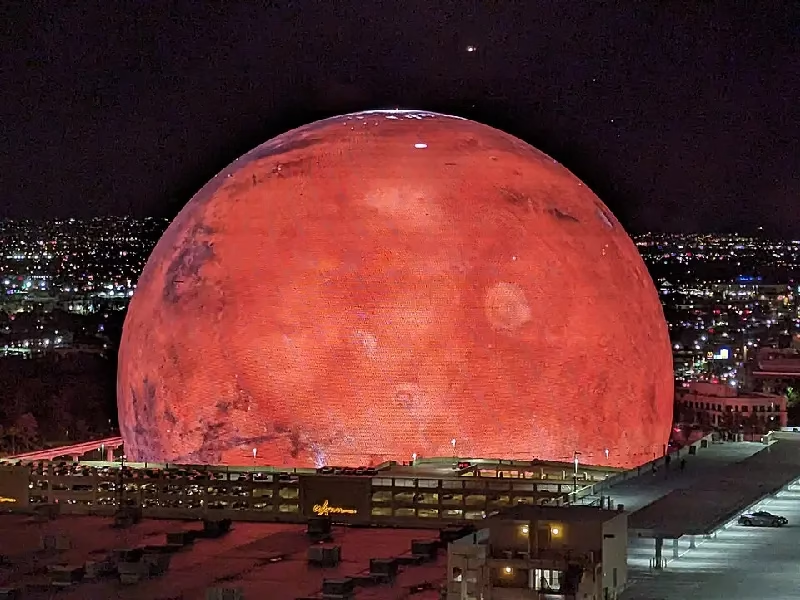
Location: Las Vegas, NV, USA
Total Size: ~580,000 sq ft (Exosphere) | 160,000 sq ft (Interior)
Resolution: 16K x 16K (Interior)
The Sphere is not merely a screen; it is a architectural revolution that has redefined the concept of “immersive entertainment.” The exterior, known as the “Exosphere,” is covered in 1.2 million LED pucks, each capable of displaying 256 million colors, making it visible from space. Inside, the main display wraps up, over, and around the audience, creating a VR-like experience without the need for goggles.
Why it matters: It proves that with enough engineering ambition, LED video walls are no longer just rectangles—they can become living, breathing environments. The sheer density of the pixels allows for hyper-realistic imagery that looks like a window into another world rather than a digital projection.
No. 2: Fremont Street Experience "Viva Vision" – A Massive LED Canopy
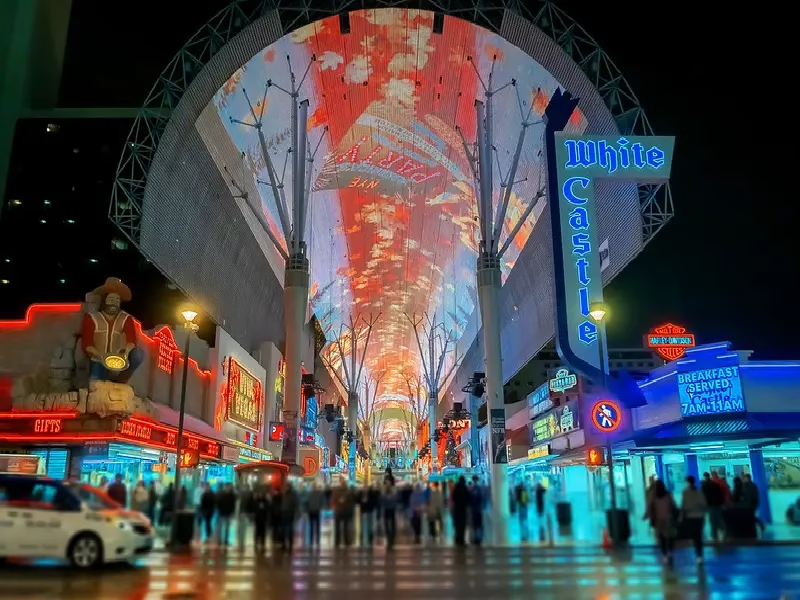
No. 2: Fremont Street Experience “Viva Vision” – A Massive LED Canopy
Location: Las Vegas, NV, USA
Size: 1,500 feet long x 90 feet wide (~130,000 sq ft)
Brightness: 5,000 Nits
Spanning five football fields above a pedestrian mall, “Viva Vision” is the largest LED canopy display in the world. Following a $32 million upgrade, the screen now features 49.3 million LEDs, delivering seven times the brightness of the original version. This allows the screen to run spectacular visuals even during daylight hours—a common challenge for outdoor displays.
Tech Insight: The screen uses custom LED modules designed to withstand the desert heat while providing ventilation for the street below.
No. 3: Resorts World – The Gigantic Building Facade LED Wall
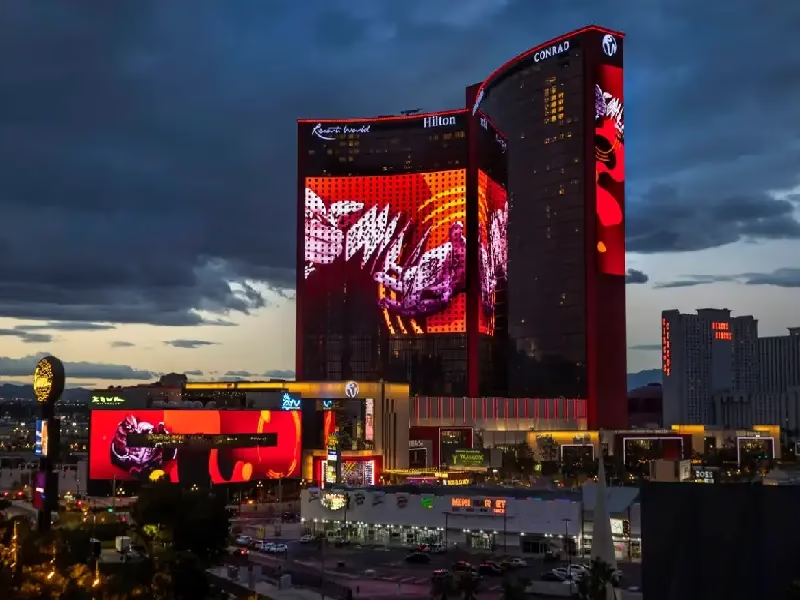
Location: Las Vegas, NV, USA
Size: 100,000 sq ft
Type: Transparent LED Mesh
Covering the West Tower of the Resorts World hotel, this is one of the largest exterior building facade LED walls in North America. Unlike solid screens, this display utilizes LED mesh technology. This ingenious design allows guests inside the hotel to see out through their windows, while people outside see a crisp, continuous 4K video advertisement.
No. 4: SoFi Stadium – The "Infinity Screen" (Center-Hung Masterpiece)
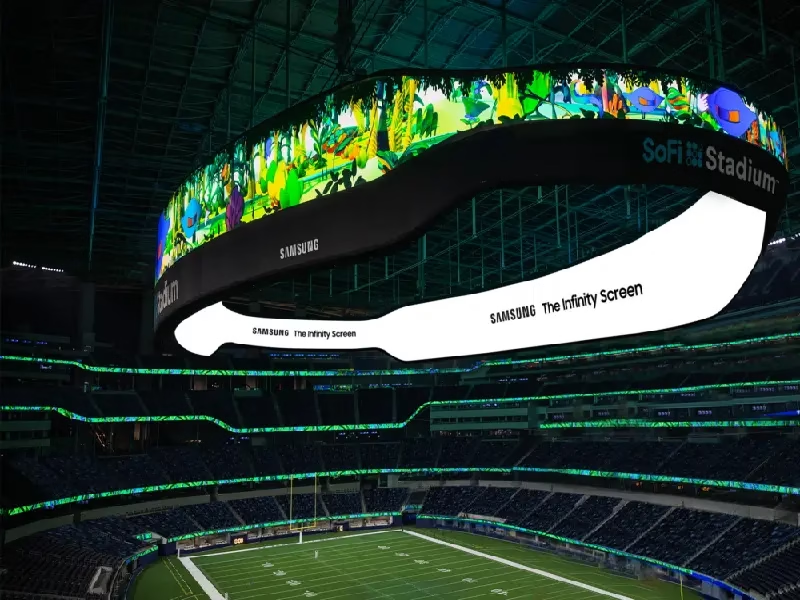
Location: Los Angeles, CA, USA
Size: 70,000 sq ft
Weight: 2.2 million pounds
Hanging 122 feet above the field, the “Infinity Screen” is a technological beast. It is the world’s only dual-sided, center-hung video board with an ovular shape. This design solves a critical problem in massive stadiums: viewing angles. Whether you are sitting courtside or in the nosebleed section, the screen is perfectly angled toward you. With 80 million pixels and a 4K HDR control system, it delivers cinema-quality replays.
No. 5: Mercedes-Benz Stadium – The 360-Degree Halo Board
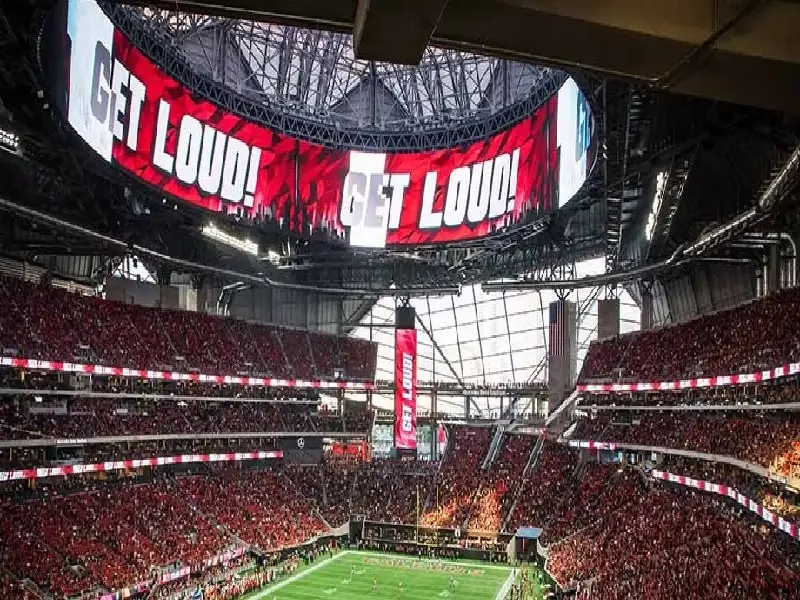
Location: Atlanta, GA, USA
Size: 63,000 sq ft
Height: 58 feet tall
Before SoFi, there was the Halo. This screen broke the mold by abandoning the traditional “box” shape. Built directly into the stadium’s retractable roof structure, this ring-shaped LED display ensures that every single seat in the house has a front-row view of the stats and replays. It creates a unified atmosphere that a standard flat screen simply cannot match.
Our Expertise: We understand that modern venues require unique shapes. Unify LED specializes in custom stadium LED displays that can be curved, angled, or wrapped to fit your architecture.
No. 6: Intuit Dome – The "Halo" 4K Arena Screen
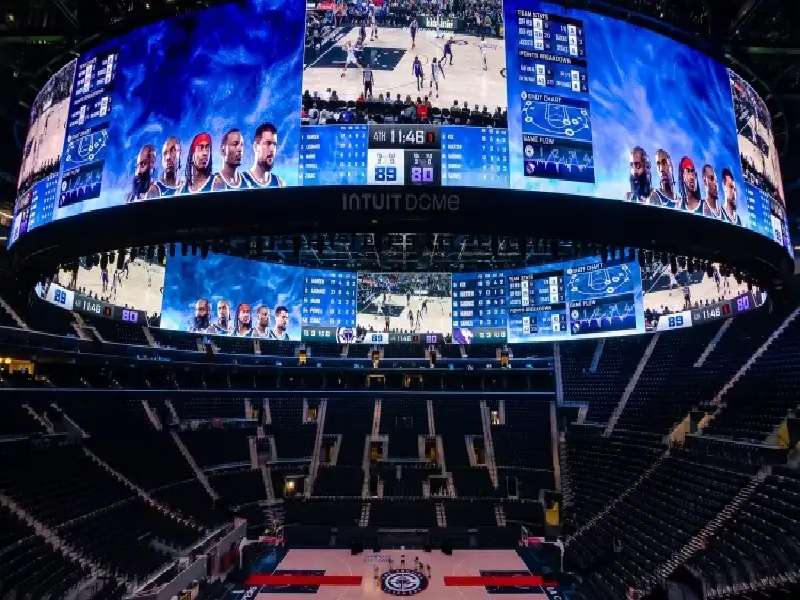
Location: Los Angeles, CA, USA
Size: 38,375 sq ft (One full acre)
Pixel Pitch: Ultra-fine pitch for close viewing
As the newest entry on our 2026 list, the LA Clippers’ new home features a “Halo” board specifically optimized for basketball. Unlike football stadiums where fans are far away, basketball fans are closer to the action. This screen uses a tighter pixel pitch (the distance between LEDs) to ensure the image looks razor-sharp even from the lower bowl. It represents the future of indoor arena screens: smarter, sharper, and more data-driven.
Expert Insight: Planning an indoor sports hall? Resolution is key. Click to learn more about our high-refresh-rate Indoor Arena LED Screen.
No. 7: Gillette Stadium – The Largest Outdoor Stadium Scoreboard
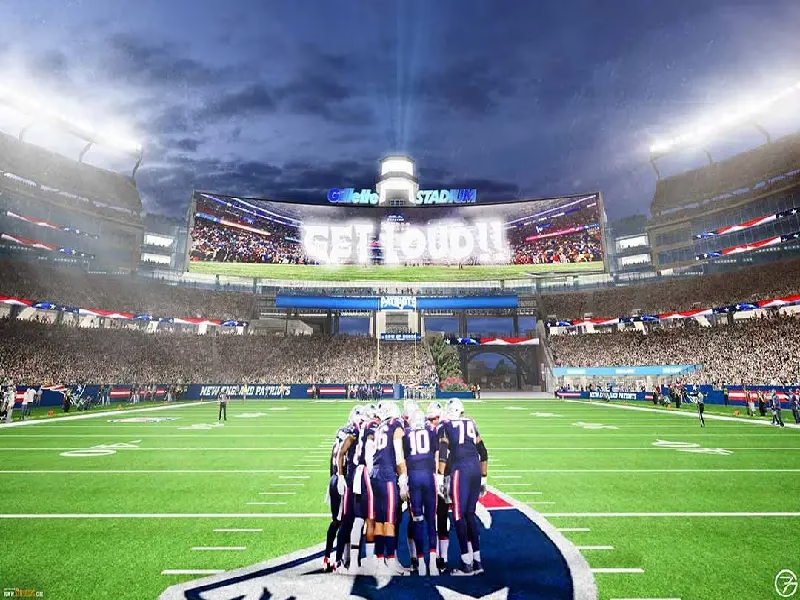
Location: Foxborough, MA, USA
Size: 22,000 sq ft (Curved)
Updated in 2023, this massive screen dominates the north end zone. But the real story here is weather resistance. Located in New England, this screen faces freezing snow, heavy rain, and scorching sun. It utilizes high-grade, fully sealed LED modules that guarantee performance when the elements are at their worst.
Weatherproof Tech: Durability is non-negotiable outdoors. Unify LED provides durable, IP65-rated Outdoor Scoreboards designed to withstand extreme environments while maintaining 8,000+ nits of brightness.
No. 8: Jacksonville Jaguars – Massive End Zone LED Displays
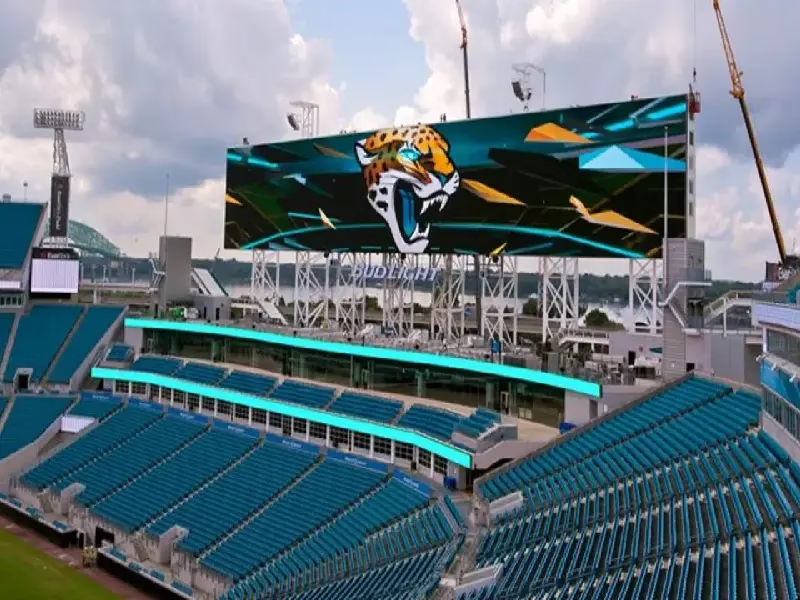
Location: Florida, USA
Size: 21,700 sq ft (each)
Sometimes, width is everything. These massive end zone displays span the entire width of the field. Their ultra-wide aspect ratio is perfect for displaying panoramic crowd shots and comprehensive game statistics side-by-side without cluttering the view. It remains one of the most effective layouts for American football stadiums.
No. 9: AT&T Stadium (Dallas, USA) – The Pioneer of Center-Hung Giants
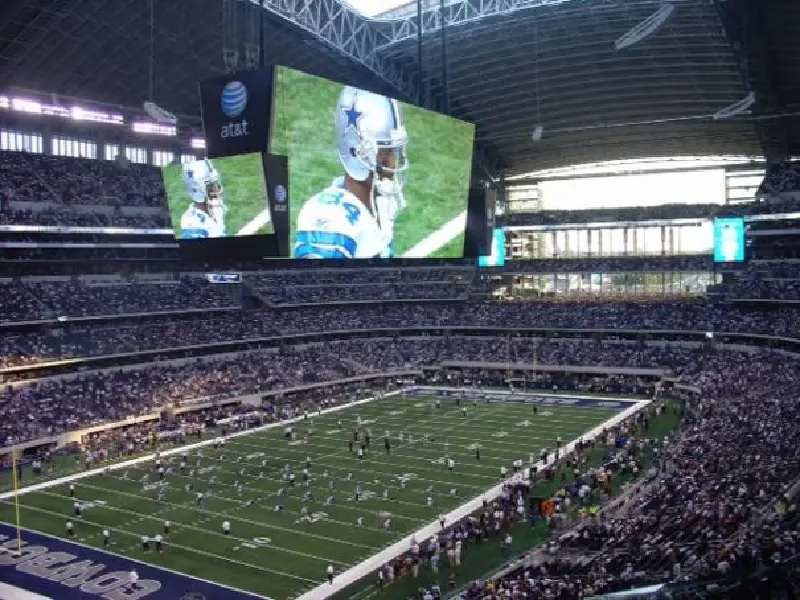
- Location: Arlington, TX, USA
- Size: 11,520 sq ft (Main screens) | 25,000+ sq ft (Total system)
- Status: The Industry Standard
When it opened in 2009, this screen (officially a Mitsubishi Diamond Vision) held the Guinness World Record for the largest HD video display. Often nicknamed “Jerrytron” by fans, its massive four-sided structure spans 60 yards—stretching from one 20-yard line to the other. It was the first LED video wall to become the centerpiece of a stadium, proving that a screen could be just as famous as the team playing beneath it.
No. 10: Citi Field – A High-Def Baseball Scoreboard System
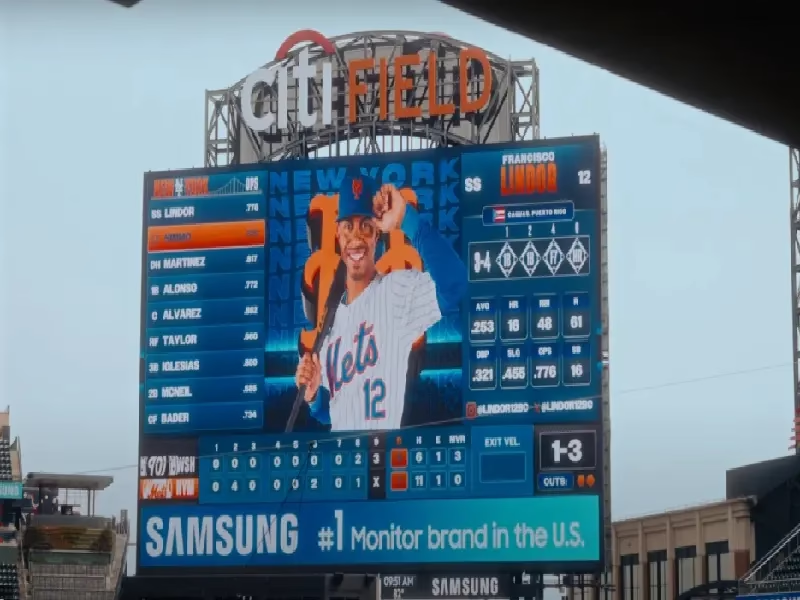
Location: New York, USA
Size: 17,400 sq ft
Innovation: Dual-Facing Design
Baseball requires unique data visualization. The new scoreboard at Citi Field features a massive forward-facing high-definition display for fans and a reverse-facing screen specifically for players and outfield fans. This ensures that everyone, on and off the field, stays connected to the game.
No. 11: The Place (Beijing) – Asia's Sky biggest LED Screen
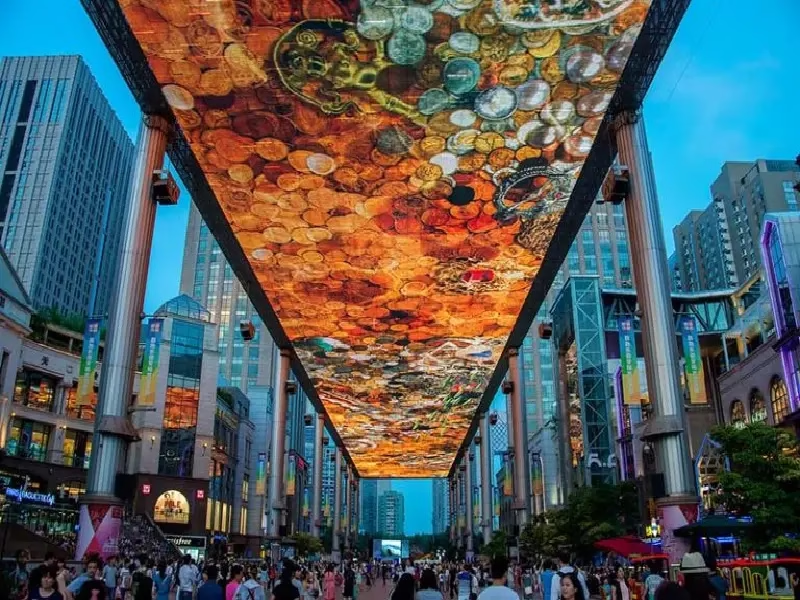
Location: Beijing, China
Type: Commercial Ceiling Display
Suspended above a busy shopping plaza, this massive sky screen creates a mesmerizing tunnel of light. It proves that LED screens can be tourist attractions in their own right, drawing millions of visitors annually just to look up.
No. 12: Mall of Taman Anggrek – The LED Facade Record Holder
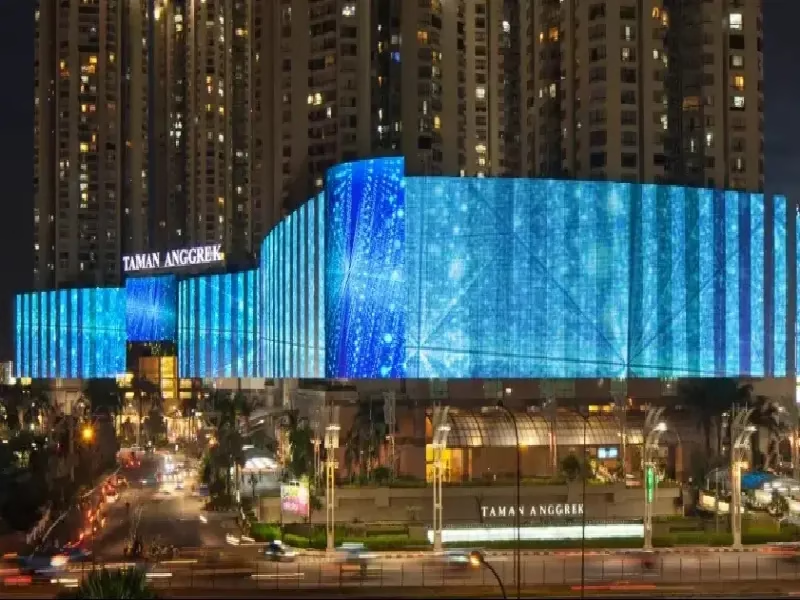
Location: Indonesia
Type: Building Wrap
Once holding the Guinness World Record, this LED facade wraps around the curved exterior of a shopping mall. It turns the building itself into a dynamic mood lamp and advertising board, visible from miles away on the highway.
No. 13: Times Square "TSX Broadway" – An Interactive Podium Screen
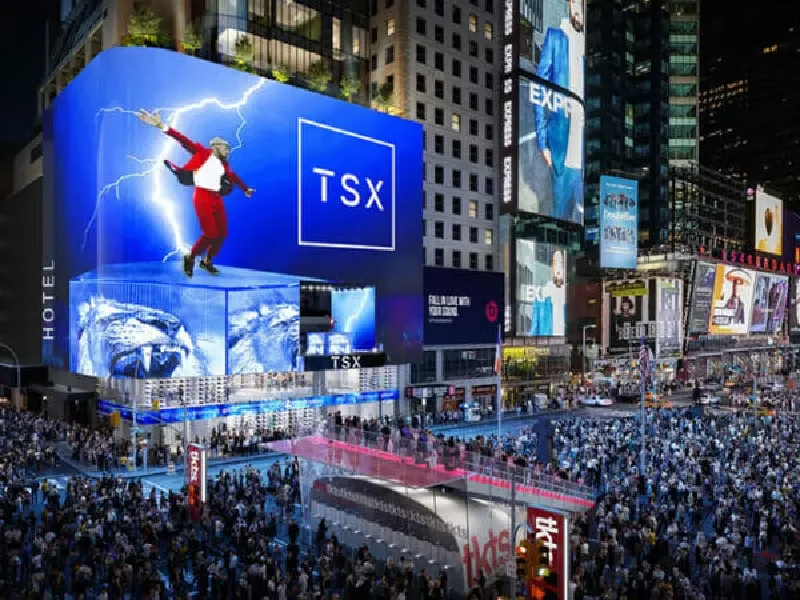
Location: New York, USA
Type: Interactive Billboards
This isn’t just a screen; it’s a stage. The 18,000 sq ft display features built-in doors that open to reveal a performance stage, merging live entertainment with digital signage. It represents the next generation of interactive LED displays.
No. 14: K-Pop Square – The 3D Anamorphic LED Billboard
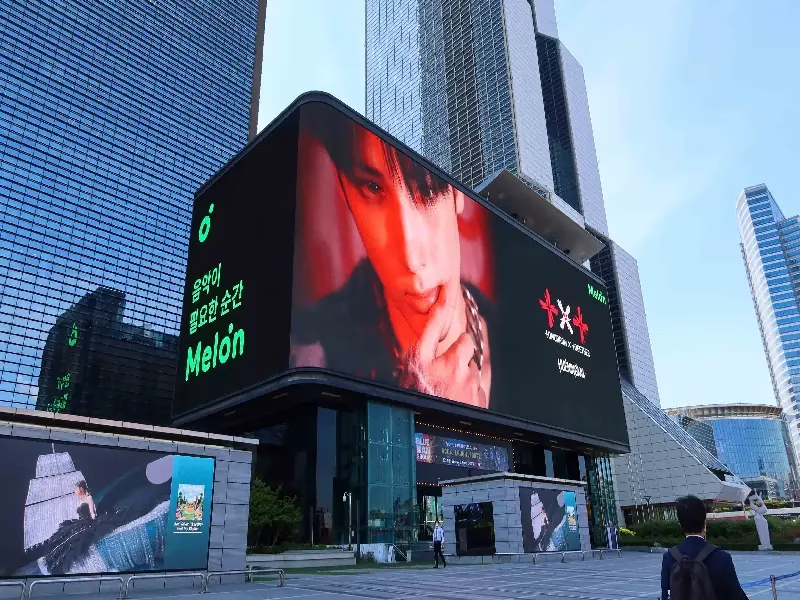
Location: Seoul, Korea
Type: Naked-Eye 3D Screen
Famous for the viral “Giant Wave” illusion, this L-shaped screen utilizes anamorphic perspective technology to create stunning 3D depth without requiring glasses. It has set the trend for creative advertising worldwide.
Go Viral: This “Naked-Eye 3D” effect is not limited to Seoul. Unify LED provides a one-stop service for 3D Naked-Eye LED Display manufacturing and content creation.
No. 15: Piccadilly Lights – The Curved Commercial Screen
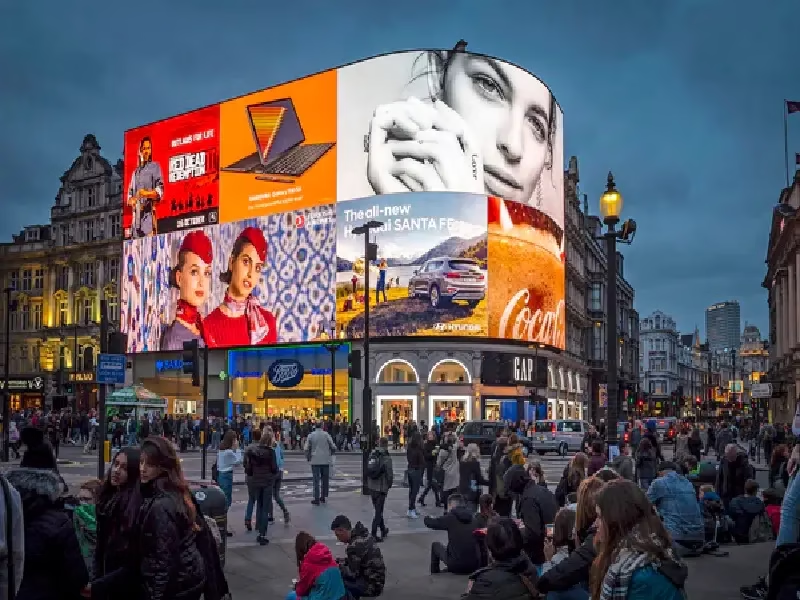
Location: London, UK
Type: Iconic Advertising Landmark
Europe’s most famous advertising space features a seamless curve that wraps around the building corner. The curved commercial screen offers high-value exposure for global brands and demonstrates the importance of smooth corner modules in modern display architecture.
2. Jumbotron vs. LED Video Wall: The Technical Evolution
When searching for the biggest LED screen in the world, you will inevitably encounter the word “Jumbotron.” While the term has become a generic catch-all, the technology powering the screens in our Top 15 list has undergone a radical transformation—from bulky tubes to the latest Common Cathode energy-saving systems.
From Ancient CRT to Common Cathode Technology
The original 1980s Jumbotrons relied on CRT (Cathode Ray Tube) technology, which was heavy and consumed massive amounts of electricity.
For years, standard LED screens used Common Anode technology. However, for massive displays (like those over 500 sqm), heat generation and electricity costs became a nightmare.
The Game Changer: Common Cathode (CC)
In 2026, the industry standard for top-tier stadium screens is Common Cathode Technology.
How it works: Unlike traditional methods that supply the same voltage to all chips, CC supplies precise power separately to Red (approx. 2.8V) and Green/Blue (approx. 3.8V) chips.
The Benefit: This precision reduces heat generation by 30% to 50%.
Why it matters: For a stadium owner, this means significantly lower cooling costs and a longer screen lifespan. Unify LED implements this Common Cathode architecture in our high-end outdoor series to ensure your “Jumbotron” doesn’t become a massive heater.
Why Pixel Pitch Determines Your ROI
Size creates the impact, but Pixel Pitch (the gap between pixels) determines the clarity—and the budget.
The Golden Rule: The closer the audience, the smaller the pitch you need.
Outdoor Stadiums: Usually P6 – P10. Since fans sit far away, using ultra-fine pitch is often a waste of budget.
Indoor Arenas: Usually P1.5 – P4. Essential for replays and close-up camera shots.
Buying Advice: Don’t just chase the lowest pixel pitch. The smartest investment is balancing resolution with viewing distance and energy efficiency.
3. How to Build a Landmark Biggest LED Screen for Your Venue
Building a world-class display system is not as simple as buying modules and plugging them in. Whether you are aiming for the “Biggest LED Screen” title or simply upgrading a local arena, the success of the project depends less on the screen itself and more on the engineering behind it.
Designing the Supporting Structure for Large-Scale LED Screens
When dealing with large-scale LED screens that weigh tens of tons, gravity and wind are your biggest challenges.
A 500-square-meter outdoor display acts like a massive sail. Without proper structural engineering, strong winds can compromise the safety of the entire stadium. This is where most generic suppliers fail—they sell you the screen but leave you to figure out how to hang it.
The Unify LED Engineering Advantage:
We don’t just supply panels; we provide a complete structural ecosystem.Wind Load Calculation: We calculate the precise wind resistance needed for your specific location (e.g., coastal stadiums require higher ratings than inland arenas).
CAD & Structural Design: Our engineering team provides detailed CAD drawings for the steel framework, ensuring the mounting points align perfectly with the LED cabinet locking systems.
Maintenance Access: For Jumbotron clusters, we design internal catwalks and rear-maintenance doors, allowing technicians to service the screen safely without disrupting events.
Cost Factors for Custom Stadium Jumbotron Projects
Budgeting for custom stadium Jumbotron projects is complex because the “sticker price” of the screen is just one variable. Three main factors drive the total investment:
Pixel Pitch vs. Viewing Distance: A P6 screen costs significantly more than a P10 screen. If your audience is 50 meters away, paying for P6 is wasted budget. We help you find the “Sweet Spot” where clarity meets cost-efficiency.
Component Quality: The choice of LED lamps (e.g., Nationstar vs. standard) and IC drivers (High Refresh Rate vs. Standard) affects both the price and the longevity.
Control Systems: A complex cluster (e.g., a center-hung screen + ribbon boards + locker room screens) requires a unified control system (like NovaStar H Series) to synchronize content across all displays with zero latency.
Stop Guessing, Start Planning.
Every venue is unique. To understand the real ROI and installation costs for your specific architecture, you need a tailored analysis.
Ready to talk numbers?
Get a precise engineering calculation and budget breakdown. Click here to request a Jumbotron Price Quote.
4. Frequently Asked Questions About Biggest LED Screens
As of the 2026 season, the Infinity Screen at SoFi Stadium is the largest overall video board system, featuring 70,000 square feet of dual-sided 4K LEDs. For traditional outdoor stadiums, Gillette Stadium currently holds the record with its massive 22,000 sq ft curved scoreboard.
Costs vary significantly based on Pixel Pitch (resolution) and size. A standard outdoor P10 screen is much cheaper than a high-definition indoor P2.5 wall. Since every installation involves unique steel structures and control systems, "per-square-meter" estimates are often inaccurate. For a precise budget breakdown, request a custom Jumbotron price quote from our team.
A high-quality LED video wall typically has a lifespan of 100,000 hours (about 11 years of continuous operation). However, longevity depends heavily on heat management. Using advanced cooling systems or Common Cathode technology can significantly extend the screen's life by reducing operating temperatures.
Absolutely, but only if they are rated correctly. For open-air stadiums, you must use Outdoor LED Modules with an ingress protection rating of at least IP65 (front) and IP54 (rear). These screens are sealed against dust, heavy rain, and even snow, ensuring reliable performance in extreme weather conditions.
Traditional screens can be power-hungry, but modern tech has changed that. New energy-saving LED displays utilize precise voltage management (Common Cathode) to reduce power consumption by up to 30-50%. This is a crucial factor for venue owners looking to lower long-term operational costs.
5. Conclusion
From the immersive curves of the Las Vegas Sphere to the weatherproof giants at Gillette Stadium, the biggest LED screens of 2026 prove one thing: visual technology is the heartbeat of modern entertainment.
But here is the reality: You don’t need to break a Guinness World Record to make a lasting impact on your audience. You simply need a display that delivers clarity, reliability, and the right engineering for your specific venue.
At Unify LED, we bring the same cutting-edge technology found in these global landmarks—such as Common Cathode energy saving and GOB impact protection—to your project, ensuring your investment stands the test of time.
Ready to upgrade your visual experience?
Whether you need a massive arena display or a compact scoreboard, Unify LED has the Jumbotron screen solution. Contact our engineering team today, and let’s build something spectacular together.
6. Related
-
Jumbotron Screen Guide: Buying & Rental Cost Analysis 2026
Explore complete Jumbotron screen details including rental rates, purchase prices, and technical specs. Compare indoor and outdoor models to select the best display.
-
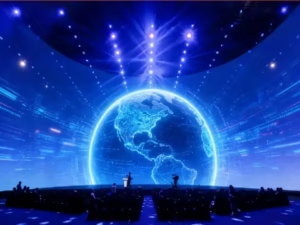
The Ultimate Giant LED Display Analysis: Price, Rental & Engineering
Explore the 2026 giant led display guide. Compare giant led screen cost, price, and rental ROI. From panels to advertising, get factory-direct insights from UnifyLED.