
What is the Real Stage LED Screen Price in 2026? (Hidden Costs)
- Home
- »
- LED Screen Buying Guides
- »
- What is the Real Stage LED Screen Price in 2026? (Hidden Costs)
Table of Contents
When researching the stage LED screen price in 2026, the first number you see on a quote is rarely what you actually pay. It is a common frustration for event organizers and rental companies: a supplier offers an attractive “panel-only” rate, but once the necessary video processors, rigging bars, and flight cases are added, the final invoice nearly doubles.
In the competitive event market, relying on these incomplete estimates can be a costly mistake. A low initial price often hides compromises in material quality—such as the use of copper wire instead of gold wire—or omits critical hardware required to get the screen running safely.
This guide is designed to eliminate that guesswork. We will break down the real cost of a stage LED display, moving beyond vague estimates to specific B2B pricing. From the raw material differences that impact durability to the “hidden” accessories like Novastar controllers and power distribution, here is your transparent roadmap to calculating the true landed cost of a turnkey stage system.
1. What is the Average Cost of a Stage LED Screen in 2026?
In 2026, the stage LED screen price depends largely on one factor: Pixel Pitch. A turnkey solution typically ranges from $800 to $2,500+ per square meter.
Here is the direct price list based on the most common market specifications:
2026 Stage Screen Price List (Estimates)
| Stage Screen Type | Spec | Price Range (USD/sqm) |
| Standard Stage Screen | Indoor P3.9 (Copper Wire) | $800 – $1,100 |
| Pro Touring Stage Screen | Indoor P2.9 (Gold Wire) | $1,300 – $1,800 |
| Outdoor Festival Stage Screen | Outdoor P3.9 (IP65 Waterproof) | $1,200 – $1,600 |
| XR / Virtual Stage Screen | P2.6 / P1.9 (Brompton Ready) | $2,300+ |
Why the Price Difference?
Standard Stage Screen: The most budget-friendly option for weddings or school halls. It uses standard materials and satisfies basic viewing needs from 5+ meters away.
Pro Touring Stage Screen: Designed for professional concerts. The higher price covers Gold Wire (durability for frequent handling) and high refresh rates required for live cameras.
Outdoor Festival Stage Screen: Built for open-air events. The cost reflects the IP65 weatherproofing and high-brightness LEDs needed to compete with sunlight.
XR / Virtual Stage Screen: The premium choice for TV studios. This includes specialized hardware for cinematic, camera-ready backgrounds without scan lines.
For a deep dive on selecting the right panel, see our Stage LED Display Solutions page.
2. Why Do Prices Vary So Much for the "Same" Stage LED Screen?
A common confusion for buyers is receiving two quotes for a “P2.9 Indoor Stage Screen” that look identical on the spec sheet, yet the stage LED screen price differs by 30% or more.
The difference lies inside the panel. Low-cost suppliers often cut corners on materials that aren’t immediately visible but critically affect lifespan and performance. Here are the three technical factors that define the real cost of a stage LED display.
Lamp Bead Quality (Gold vs. Copper Wire)
The single biggest factor influencing the stage LED screen price is the encapsulation material inside the LED lamp.
Gold Wire (The Pro Standard): High-end stage screens use 99.99% Gold Wire for the internal connection. Gold is highly conductive and resistant to oxidation. For rental companies moving screens daily, this is essential to prevent “dead pixels” caused by vibration and humidity.
Copper Wire (The Budget Option): To lower the LED display cost, budget manufacturers use Copper or Alloy wire. While it looks identical to the naked eye, copper oxidizes faster. After a year of use, you may face frequent lamp failures.
The Cost Reality: Gold wire encapsulation typically adds 20% to the raw material cost, but it guarantees the reliability required for live touring.
Refresh Rate ICs (The Camera Test)
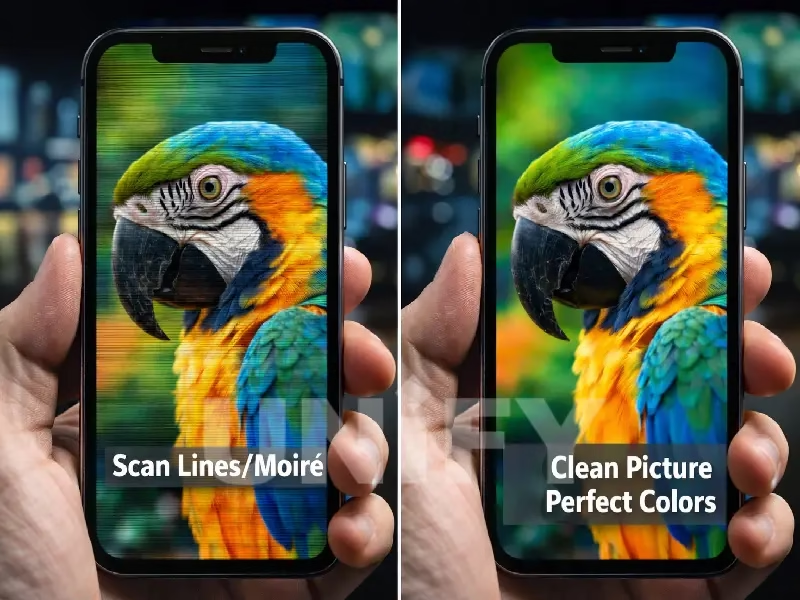
If a stage LED screen price seems too good to be true, check the Driver ICs.
3840Hz+ (Broadcast Grade): Professional concerts and events are almost always filmed or live-streamed. A refresh rate of 3840Hz or higher is mandatory to ensure the screen looks flawless on camera, with no flickering or “scan lines.”
1920Hz (Standard Grade): Cheaper screens use standard ICs (1920Hz). These look fine to the human eye, but if an audience member takes a photo or video with their phone, black bars (Moiré patterns) will appear across the content.
PCB Board Quality (Stability)
The Printed Circuit Board (PCB) is the backbone of your screen.
4-Layer PCB: Reliable stage screens use a 4-layer PCB design. This provides better heat dissipation and electromagnetic compatibility (EMC), ensuring the screen stays cool and stable during long events.
2-Layer PCB: To shave off costs, budget screens use a 2-layer PCB. These are prone to overheating, which can lead to color inconsistency and a shorter lifespan for the components.
3. What Are the Hidden Costs Most Suppliers Won't Tell You?
When budgeting for an event, focusing solely on the “price per square meter” is a common mistake. A raw panel quote is only about 80% of the final stage LED screen price.
To turn a pile of cabinets into a working display, you must account for the “hidden” hardware. Omitting these from your initial budget can lead to surprise costs later. Here are the three non-negotiable add-ons for a complete turnkey LED solution.
Control System
The LED panels cannot display content without a controller. Many initial quotes exclude the sending cards and video processors, which can add significantly to the total cost.
Novastar (VX Series): The industry workhorse. For 90% of concerts and corporate events, the Novastar VX series offers the best balance of performance and price. It is user-friendly and handles standard 4K inputs perfectly.
Brompton / Megapixel: If you are building an XR stage or a virtual production volume, standard controllers won’t cut it. You will need high-end processors like Brompton or Megapixel. While these are expensive, they offer “in-camera” color management and low latency that are unbeatable for film work.
Rigging & Structure
Safety is the one area where you cannot cut costs. How you mount the screen is just as important as the screen itself.
Hanging Bars: Never use generic iron bars for a large stage. You must invest in TUV-certified hanging bars. These ensure the screen can safely bear the weight of a 10-meter high stack without bending or risking collapse.
Truss System: If the venue doesn’t have existing rigging points, you will need to rent or buy a ground support truss system. This structural cost is separate from the stage LED screen price but essential for installation.
The "Spare Parts Rule" (5-10%)
This is the most overlooked cost by first-time buyers. LED diodes are manufactured in batches, and no two batches have the exact same color brightness or temperature.
Batch Color Mismatch: If a module fails two years from now and you buy a new replacement, it will likely look slightly different—creating a “patchwork” look on your stage.
The Solution: You must purchase 5-10% spare modules and power supplies at the same time as the main screen. This ensures all parts come from the same manufacturing batch. Treat this not as an extra fee, but as insurance for the screen’s lifespan.
4. How Does a "Turnkey Solution" Breakdown Look on an Invoice?
Many buyers calculate their budget by simply multiplying the screen size by the “per square meter” rate. However, a functional stage LED screen price involves more than just the panels.
To help you visualize the real-world investment, let’s look at a sample invoice for a standard mid-sized event setup.
Case Study Scenario:
A client requests a 20-square-meter (approx. 5m x 4m) P2.9 Indoor Rental Screen. This is a typical configuration for corporate events, hotel ballrooms, or medium-sized concert stages.
The "Real-World" Cost Breakdown
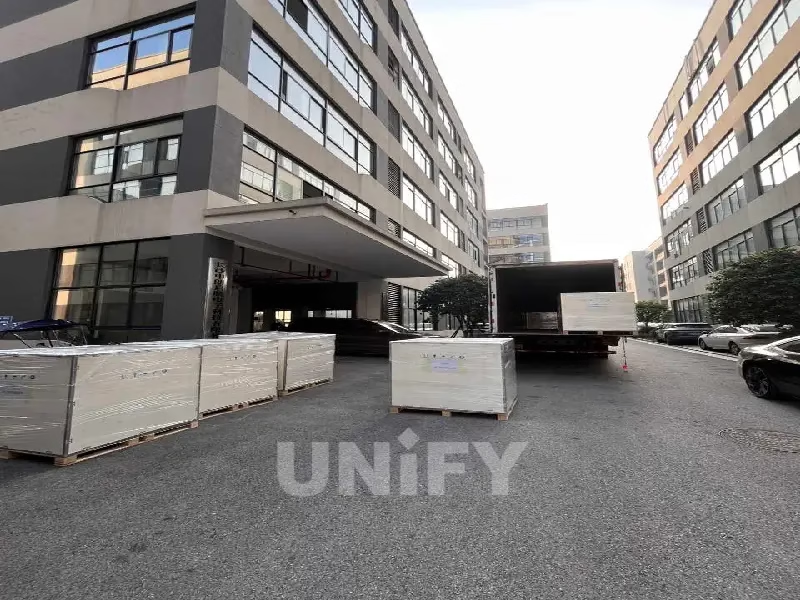
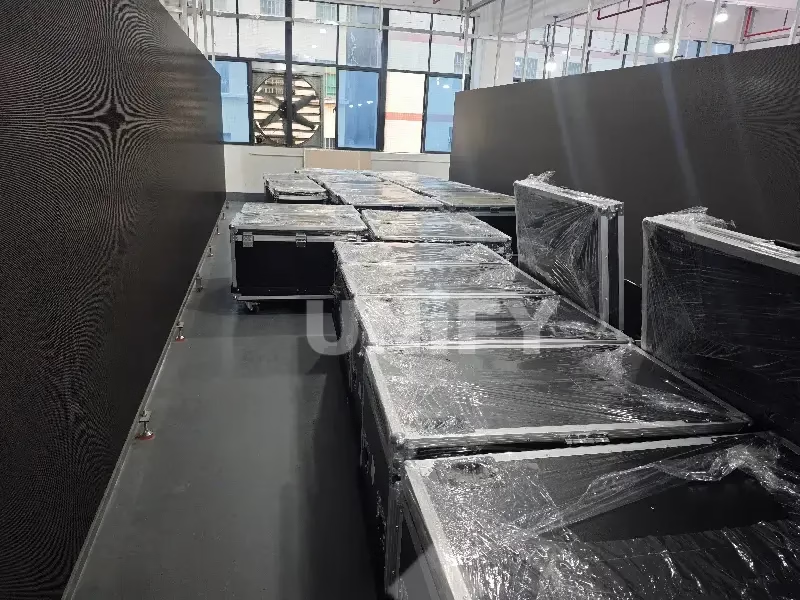
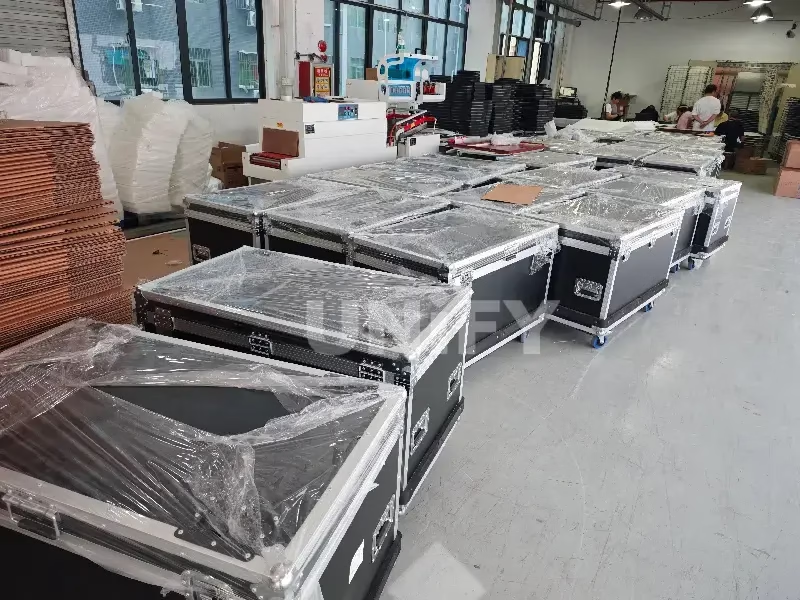
Here is what a professional, turnkey quote looks like for a high-quality touring system:
1. LED Panels (Gold Wire Encapsulation): $28,000
The core hardware. This price reflects premium P2.9 cabinets using Gold Wire for maximum durability during frequent touring.
2. Video Processor (Novastar VX1000): $1,200
The brain. A necessary All-in-One controller to scale the video signal and manage the screen layout.
3. Power Distribution Box: $800
The safety net. A smart power distribution unit (PDU) is critical to manage voltage stability and prevent circuit overloads during the show.
4. Flight Cases (8-in-1 Design): $1,000
The protection. Rental screens are moved constantly. Heavy-duty flight cases with impact-resistant foam are essential to protect your asset during transport.
5. Data & Power Cables (Seetronic/Neutrik): $600
The veins. We quote high-end Seetronic or Neutrik connectors. Using cheap cabling is the #1 cause of signal flickering on stage.
Total System Price: ~$31,600
If you only looked at the “screen price,” you might expect to pay 1,400 per sqm (28,000 total). However, the turnkey stage LED screen price—the amount required to actually put the screen to work—is roughly 13% higher due to the essential accessories.
When comparing quotes from different suppliers, always ask: “Does this price include the processor, flight cases, and power distribution?” Comparing a “naked panel” quote against a “turnkey” quote is apples to oranges.
To build a custom package for your specific venue size, visit our Stage LED Display Solutions page.
5. How to Decide: Should You Rent or Buy Your Stage Screen?
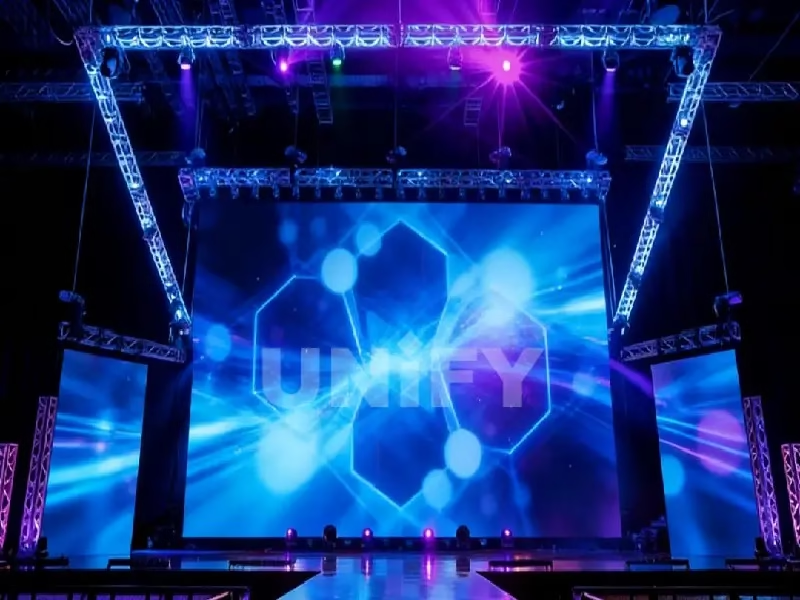
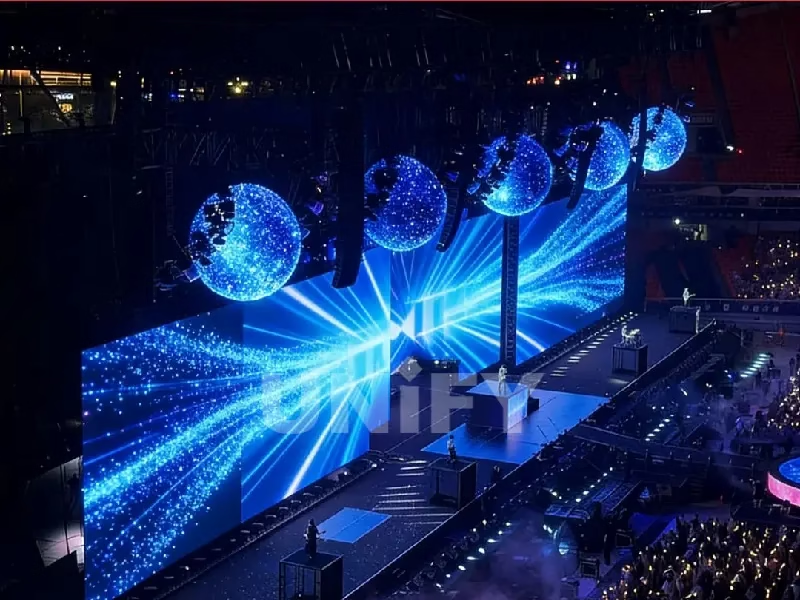
For event production companies and frequent organizers, this is the ultimate financial question. While the upfront stage LED screen price of $30,000+ can seem daunting, sticking to rental contracts often costs significantly more in the long run.
Here is the financial breakdown to help you decide based on your event frequency and budget.
The Break-Even Calculation
The decision should be based on a simple math formula: Annual Rental Spend vs. Purchase Cost.
The Scenario: A typical 20sqm P2.9 stage screen.
Average Market Rental Rate: ~$150 – $250 per sqm/day (including setup labor).
Cost per Event: ~$3,000 – $5,000 per show.
Purchase Price: ~$30,000 (Turnkey).
The Verdict: If you host 7 to 10 events a year, you will pay off the screen in just 12 months. Every event after that is 100% profit (minus minor transport costs).
Recommendation: If your calendar has monthly events, renting is throwing money away. Buying converts that expense into a long-term asset.
Profit Margins: Dry Hire vs. Full Service
Owning a stage screen opens up new revenue streams that offset the purchase price.
Cross-Rental (Dry Hire): Even when you aren’t using the screen, you can rent the panels to other staging companies.
Market Rate: You can charge other companies 3-5% of the screen’s value per day just for the hardware.
Low Operational Cost: Thanks to modern Front Service designs (magnetic modules), you don’t need to pay expensive specialist engineers for maintenance. Replacing a module costs minutes, not money, keeping your profit margins high on every rental job.
When Renting Still Makes Financial Sense
Don’t buy if you can’t maximize the ROI. Renting is the smarter financial choice if:
You need a specific, non-standard shape (e.g., a massive curved screen or transparent screen) for a one-off show.
Your annual event frequency is under 5 times. The depreciation of the hardware might outpace your usage value.
6. Why the "Cheapest" Stage Screen Can Be the Most Expensive
When comparing stage LED screen prices, it is tempting to choose the lowest bidder. However, in the rental business, the initial purchase price is only half the equation. The other half is your Earning Potential and Risk Cost.
Here is why opting for the cheapest component configuration often leads to financial loss in the long run.
The Cost of Failure
In the live event industry, there are no “second takes.”
The Financial Hit: If a cheap power supply fails during a concert or a corporate keynote, the organizer may demand a refund. One failed show can cost you more in refunds and damaged reputation than the money you saved on the screen.
The Price of Insurance: Professional screens use Dual Backup Systems (Signal & Power redundancy). While this adds about 10-15% to the hardware price, it is essentially “business insurance” that guarantees you get paid for every show.
Lower Rental Income Potential
The quality of your screen dictates how much you can charge your clients.
Limited Market: A budget screen (low refresh rate, standard brightness) is limited to weddings or small parties with low budgets. You cannot pitch it for high-paying TV broadcasts or premium car launches because it won’t pass the camera test.
Lower ROI: By investing ~20% more for a High-Refresh, Gold-Wire screen, you unlock the “Premium Rental Market,” allowing you to charge higher daily rates and recoup your investment faster.
7. Conclusion
In 2026, the question is not just “What is the stage LED screen price?” but “What is the total cost to own and operate it?”
A transparent quote goes beyond the $800/sqm sticker price. It accounts for:
The “Turnkey” Hardware: Processors, power distribution, and rigging bars.
The Lifespan Materials: Gold wire and 4-layer PCBs that last years, not months.
The Operational ROI: The ability to handle high-end events and easy front-maintenance.
Don’t let hidden fees or cheap components eat into your profit margins. Contact UnifyLED today. Tell us your stage size, and we will provide a fully itemized quote that breaks down every component—so you know exactly what you are paying for.
8. FAQs
The market average ranges from $800 to $2,500+ per sqm.
Budget (P3.9 Copper Wire): $800 - $1,100 / sqm.
Pro Touring (P2.9 Gold Wire): $1,300 - $1,800 / sqm.
High-End XR (P2.6 Brompton): $2,300+ / sqm.
A complete 20m² (approx. 5m x 4m) professional touring system costs between $28,000 and $35,000. This turnkey stage LED wall cost includes the panels, Novastar processor, power distribution box, hanging bars, and flight cases.
Rarely. Most online quotes only cover the panels. You must add an extra 10-15% to the base stage LED display price for the essential "control system" (sending cards, video processor) and rigging accessories.
It depends on frequency. If you host fewer than 5 events a year, paying the stage LED screen rental price (approx. 150-250/sqm/day) is cheaper. If you host 10+ events, buying the screen yields a higher ROI.
Pixel density dictates the cost. A P2.6 screen has nearly double the LED lamps of a P3.9 model. This doubles the material cost and IC usage, making the P2.6 concert screen price roughly 40-50% higher than standard P3.9 models.
Yes. Outdoor stage LED screen prices are typically 15-20% higher than indoor models. This covers the cost of IP65 weatherproofing (glue filling), high-brightness diodes (4500+ nits), and reinforced rugged cabinets.