Jumbotron vs. Modular LED Video Wall: Which is Better for Your Project?
- Home
- »
- LED Screen Buying Guides
- »
- Jumbotron vs. Modular LED Video Wall: Which is Better for Your Project?
When people think of massive stadium displays, the first word that usually comes to mind is “Jumbotron.” While the term “Jumbotron” has become synonymous with massive displays (you can read our deep dive into its history here), modern project requirements have shifted significantly. In 2026, the question for event organizers and venue managers is no longer just “how big,” but “how smart.”
As a technical consultant at UnifyLED, I often speak with clients who are initially looking for a “Jumbotron” but actually need the flexibility of modern technology. Modular LED video walls have emerged as the dominant alternative to traditional Jumbotron-style setups. This guide breaks down the core differences from an engineering perspective to help you choose the best technology for your specific needs.
Table of Contents
1. What is the Technical Difference Between a Jumbotron and a Modular LED Video Wall?
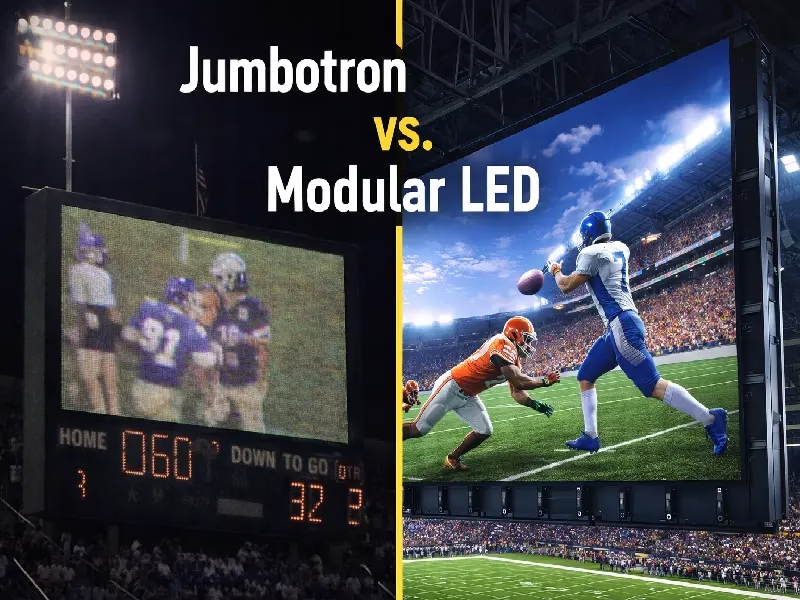
To understand the core difference between Jumbotron and modular LED video wall technology, we must look at their underlying architecture. Historically, a Jumbotron is a single-chassis, fixed-size unit, whereas a modular LED video wall is a scalable system composed of multiple interlocking panels that function as a single seamless display.
According to Wikipedia, the Jumbotron was originally a brand name for Sony’s large-scale video displays, which utilized vacuum-fluorescent display (VFD) technology before evolving into LEDs. In technical terms, a traditional Jumbotron was a “static” giant—a heavy, pre-fabricated unit with a set aspect ratio. Once a traditional Jumbotron was manufactured, its physical dimensions and pixel resolution were permanent, offering zero flexibility for future upgrades or shape customizations. It was essentially a massive television in a rigid box.
At UnifyLED, we represent the next generation of large-scale display technology. We view the modern modular LED video wall not as a static piece of hardware, but as an infinitely spliceable digital canvas. Unlike the legacy Jumbotron, our modular systems are built from precision-engineered LED cabinets (panels). These modules interlock seamlessly to create any size, shape, or resolution required by a specific project.
Static vs. Scalable: While a Jumbotron is limited by its physical frame, a modular LED wall allows engineers to build displays that wrap around corners, curve with architecture, or scale up from a standard 16:9 conference screen to a massive stadium wrap-around.
Engineering Versatility: The modular approach means you are no longer buying a “product” with fixed limits; you are investing in a “system” that can be expanded or reconfigured as your venue’s needs evolve—a feat that was technically impossible for the original Jumbotron.
2. Why Does a Modular LED Video Wall Outperform a Traditional Jumbotron in Visual Resolution?
When evaluating the visual resolution of a modular LED video wall vs traditional Jumbotron, the technical superiority of modern modular systems is primarily driven by diode density and advanced control electronics. While the original Jumbotrons revolutionized stadium viewing in the 1980s, they were engineered for a specific, distant perspective that fails to meet the high-definition standards of the 2020s.
The most critical factor in this performance gap is Pixel Pitch—the center-to-center distance between two pixels (LED clusters).
Pixel Density and Viewing Distance: Traditional Jumbotrons were typically manufactured with large pixel pitches, often ranging from 10mm to 25mm (P10–P25). At these specs, the human eye can easily distinguish individual light sources unless standing at a distance of 30 meters or more. In contrast, modern modular LED technology has pushed pixel pitches down to “Fine Pitch” levels, such as P2.5, P1.5, or even sub-1.0mm. This high density allows for a seamless, “retina-level” experience where the screen remains sharp even when viewed from just a few feet away.
Refresh Rate and Broadcast Quality: Beyond static resolution, the “visual stability” of a display is determined by its refresh rate. Legacy Jumbotron systems often operated at lower frequencies, which frequently resulted in a “flicker” effect or the dreaded Moiré pattern when captured by professional broadcast cameras. Contemporary modular LED arrays utilize high-performance driver ICs capable of 3,840Hz to 7,680Hz refresh rates. This ensures a fluid, flicker-free image that is essential for live television, sports broadcasting, and digital cinematography.
4K/8K Compatibility and Aspect Ratio: A traditional Jumbotron was often a standalone unit with a non-standard resolution, requiring significant video scaling that degraded image quality. Modern modular systems are designed to support native 4K and 8K resolutions through 1:1 pixel mapping. Because the system is modular, engineers can assemble cabinets to match standard broadcast aspect ratios (such as 16:9) perfectly, ensuring that high-definition content is displayed without stretching, cropping, or distortion.
In summary, while the traditional Jumbotron was a marvel of its era for long-distance visibility, the modular LED video wall is a precision instrument designed for the high-fidelity demands of 2026. The shift from “big-and-blurry” to “large-and-ultra-clear” is what allows modern venues to replace legacy stadium screens with displays that rival the clarity of high-end consumer monitors on a massive scale.
3. How Do Installation Costs Compare for a Jumbotron vs. a Modular LED Screen?
When calculating the total installation costs of a Jumbotron vs. a modular LED screen, project managers must look beyond the price of the hardware itself. The true economic divide lies in the structural engineering, heavy machinery requirements, and the sheer number of labor hours required to make the display operational.
While a traditional Jumbotron is a massive civil engineering project, a modular LED screen is a precision assembly task. To provide a clear overview of these logistical differences, the following table compares the primary cost drivers:
| Metric | Traditional Jumbotron (Legacy) | Modern Modular LED Screen |
| Chassis Material | Heavy-duty reinforced steel | Lightweight die-cast aluminum |
| Logistics & Equipment | Large cranes and specialized rigging | Hand-carried panels / standard tools |
| Structural Support | Massive custom steel framing | Slim wall brackets or ground stacks |
| Installation Timeline | Several days to weeks | A few hours to one business day |
| Labor Requirement | High (Large engineering crews) | Low (Small specialized technician team) |
The primary reason installation costs for a traditional Jumbotron are so high is the requirement for massive structural reinforcement. Because these units are heavy, static “boxes,” they often require custom-engineered steel skeletons to support their weight and wind load. This often involves onsite welding, specialized architectural certifications, and heavy-duty cranes to lift the chassis into place.
In contrast, a modular LED screen utilizes lightweight, high-precision aluminum cabinets. These panels are designed to be “man-portable,” meaning they can be carried and positioned by a single technician. Instead of requiring a crane, modular panels utilize sophisticated fast-lock systems that allow them to be “clicked” into place. This significantly reduces the structural burden on the building or stage, often allowing the screen to be mounted directly onto existing walls or simple truss systems without expensive reinforcements.
In the world of commercial venues and live events, “time is money.” Installing a traditional Jumbotron is a slow, methodical process that can take a stadium or plaza offline for days or even weeks. This downtime represents a significant loss in potential revenue.
Modular technology has transformed this timeline. Because the components are standardized and the interlocking mechanisms are streamlined, a professional crew can often install a 50-square-meter modular wall in a single work shift. For rental applications or retail renovations, this speed translates to lower labor bills and a faster return on investment (ROI), as the screen becomes operational—and starts generating advertising value—almost immediately.
In summary, while the purchase price of the screens may sometimes appear comparable, the installation costs of a modular system are consistently lower. By eliminating the need for heavy machinery and reducing labor time by up to 80%, modular technology has made large-scale digital displays accessible to projects that previously could not afford the logistical overhead of a traditional Jumbotron.
4. Why is a Modular LED Video Wall a Better Long-Term Investment (ROI) Than a Jumbotron?
For project managers and venue owners, a large-scale display is a strategic asset. When evaluating the long-term investment value, the ROI of a modular LED video wall consistently outperforms a traditional Jumbotron due to its superior accessibility and technological longevity. While the initial purchase price is often the focus, the true financial impact is determined by the total maintenance costs and the asset’s lifespan.
The most significant drain on ROI for a traditional Jumbotron is the specialized labor required for repairs. Because legacy systems were often built as massive, integrated units, many required “rear-access” maintenance. This meant that if a single internal component failed, technicians had to deconstruct large sections of the screen or access the unit via internal crawl spaces. This results in hours, or even days, of “dead screen” time, which translates directly into lost advertising revenue.
Modern modular LED video wall technology utilizes a “Hot-Swappable” Front-Service design.
The 10-Second Rule: In a modular system, a faulty LED module can be removed from the front using a magnetic vacuum tool and replaced in under 10 seconds—without powering down the rest of the display.
Profit Protection: By ensuring nearly 100% uptime, modular systems protect the venue’s revenue streams and reputation, ensuring the long-term investment remains productive.
Technological obsolescence is the ultimate risk for a long-term investment. A traditional Jumbotron is a closed, proprietary system. When the resolution becomes outdated or the control system fails, the entire structure often becomes a “white elephant”—it is too integrated to be partially upgraded and too expensive to fix, eventually requiring total scrappage and a massive reinvestment in a new system.
A modular LED video wall is built on a granular architecture, offering two critical financial protections:
Component Upgradability: Venue owners can retain the existing structural mounting and power infrastructure while upgrading only the LED modules to a higher resolution (e.g., transitioning from P4 to P2).
Inventory Continuity: Because the system is built from standardized cabinets, owners can maintain a small inventory of identical spare modules. This allows for the targeted replacement of aging components, effectively extending the life of the overall display indefinitely without a full-scale replacement.
In summary, the ROI of a modular system is defined by “uptime” and “adaptability.” By slashing maintenance labor and eliminating the need for full-scale replacements every decade, the modular LED video wall represents a far more secure and profitable long-term investment than the legacy Jumbotron models of the past.
5. How to Choose Between a Jumbotron and a Modular LED Display for Your Specific Project?
Deciding to choose between Jumbotron and modular LED display technology depends on your venue’s viewing distance and maintenance needs. Use this quick checklist to evaluate your project:
Viewing Distance: Is your audience closer than 20 meters? (Choose Modular LED).
Installation Type: Is this for a temporary event or retail renovation? (Choose Modular LED).
Content Resolution: Do you need to display 4K/8K video? (Choose Modular LED).
Maintenance: Is rear access physically impossible or difficult? (Choose Modular LED).
When a Traditional Jumbotron Makes Sense
A heavy-duty, fixed-frame Jumbotron architecture is typically reserved for permanent outdoor stadiums or city landmarks. If your screen is positioned 50+ meters from the audience and will remain in one location for 20 years, this legacy technology remains a viable option for sheer massive scale where high-resolution detail is secondary.
Why Modular LED is the Modern Business Standard
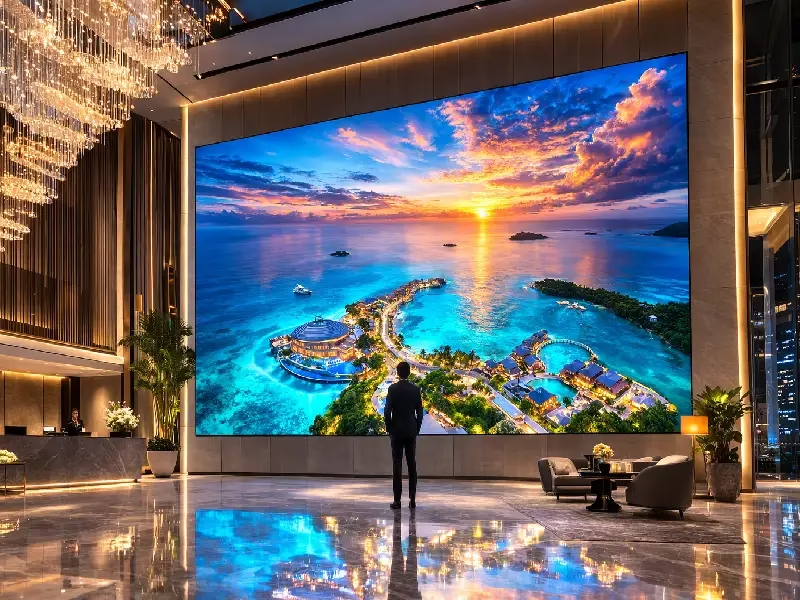
For 95% of contemporary commercial applications, modular LED video walls are the superior choice:
Corporate & Retail: Lobbies and flagship stores requiring seamless 4K clarity.
Live Events: Concerts and trade shows that need rapid assembly (hours vs. days).
Indoor Spaces: Churches and auditoriums where silent operation and close-range sharpness are critical.
6. Conclusion
Deciding between a Jumbotron and a modular LED video wall is a choice between legacy scale and modern precision. While Jumbotrons still serve a niche for permanent stadium landmarks, modular LED technology is the 2026 industry standard for 95% of commercial projects. These modular systems deliver superior 4K resolution, significantly lower installation costs via lightweight aluminum frames, and a protected ROI through 10-second front-service maintenance. Rather than settling for a rigid, static box, invest in a scalable digital canvas and contact us today for a free 3D render and professional project consultation.
7. FAQs
While the hardware price of a traditional Jumbotron and a modular LED wall may seem comparable, the total cost of ownership (TCO) differs significantly. A Jumbotron often involves high "hidden costs" in heavy-duty steel structures and crane rentals. Conversely, a modular LED video wall reduces installation and labor costs by up to 50% due to its lightweight aluminum frames and rapid-lock systems.
Yes. Modern modular LED technology is the preferred replacement for aging Jumbotrons. It offers much higher resolution (finer pixel pitch), lower power consumption, and fits into most existing stadium frameworks. Unlike old static units, modular panels can be scaled to any size or aspect ratio, making them a future-proof upgrade for any sports arena.
Both technologies typically use LEDs rated for 100,000 hours. However, the "functional lifespan" of a modular LED wall is longer because it is easier to maintain. With 10-second front-service modules, you can replace individual parts instantly. A traditional Jumbotron often requires full-unit disassembly for repairs, making it more likely to be scrapped when multiple components fail over time.
Absolutely. Modern modular LED panels are engineered with IP65/IP68 weather protection, ensuring they are just as durable as traditional outdoor Jumbotrons. They are designed to withstand extreme heat, rain, and wind while providing much higher brightness and contrast, ensuring clear visibility even in direct sunlight.